Robinson and Sons was founded in Chesterfield in 1839, they started out with 25 employees, creating square pill boxes from chipboard and round willow boxes for medical ointments. In the 1860s they began producing medical cotton wool and later acquired the patent for Gamgee tissue which was the basis for modern surgical dressings.
Initiatives to improve employee welfare were set up in the 1920s, including a preparatory school, access to low-cost housing and a popular canteen and social venue at Bradbury Hall.
By 1952, Robinson's had patented the first-ever disposable nappy system with Paddi and Cosifits, and soon after produced some of their most iconic packaging - the Little John Drum spiral tube box for Rowntree’s Smarties. At this time, they were producing over 43 million Quaker cereal boxes per year and, by 1960, employing 5,000 staff worldwide.
The company shifted towards plastic manufacturing in the 1970s and 80s, and evolved to become Robinson plc in 2004, producing high-quality custom packaging for the personal care, luxury gift and food sectors with sites in Chesterfield and Poland.
Follow this link to find out more about Robinson's history.
Derbyshire Record Office
Our collections span 900 years of Derbyshire history. We have around three million items and that's ever-growing. It's nearly 9,000 collections – and a collection can be one item, or it could be 400 boxes of items.
The vast majority of the Robinson’s collection came to us from the business, but there are additions from people who used to work there – copies of The Link magazine, photographs from events – things that will help people in the future understand how a business ran. It's always fascinating to see what sparks that bit of imagination in somebody else.
Karen Millhouse, Archivist, Derbyshire Record Office
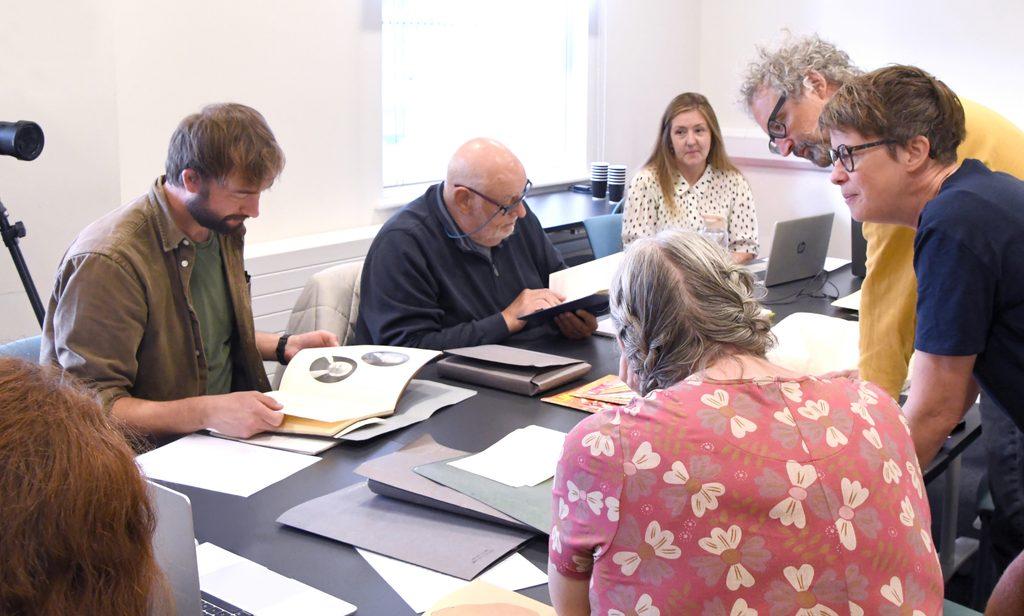
Volunteers
Alison Bowry
Eve Connor
Terry Fox
Penny Soames
Martyn Stonehouse
Volunteer Writing
Philip Moffat Robinson was at the heart of Robinson and Sons' philanthropic endeavours in the early 20th century. Martyn Stonehouse tells us more here...
In the 1920s, the future Mayor of Chesterfield, Florence Robinson, founded the Robinson’s Amateur Operatic and Dramatic Society. Eve Connor celebrates its success and resilience.
Penny Soames' grandmother, Vera Ida Hunt, worked for Robinsons in the early 1960s. Penny writes about her research inspired by her family connection here.
Penny's research for WORK Records prompted her to explore the former Robinson's sites in Chesterfield, and in turn, this has inspired her own textile art works. Read more and see some of Penny's artwork here.
Terry Fox's research on the Crimea War had uncovered some Robinson family connections, but on WORK Records he went on to find a very different and eggstra-ordinary story...
Robo’s Angels Take London...
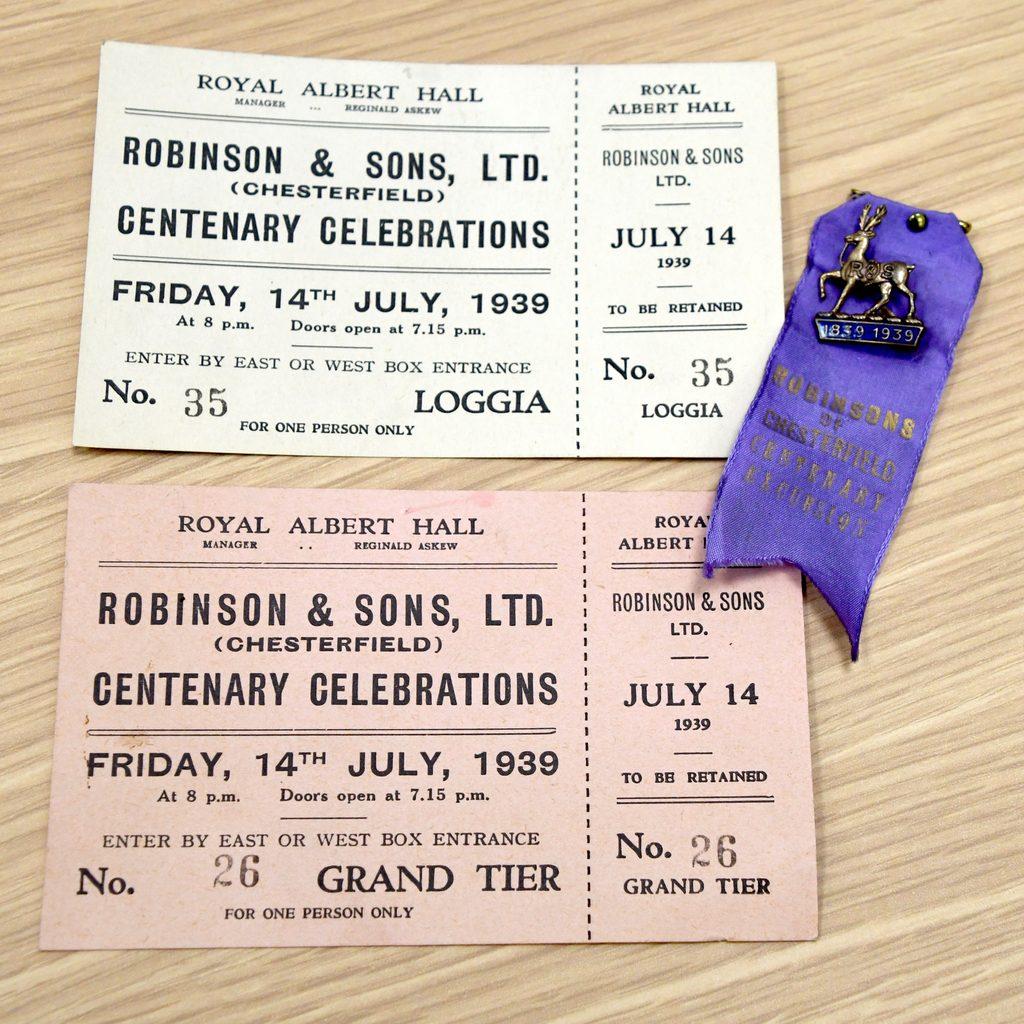
In July 1939, to celebrate the company’s centenary, Robinson and Sons treated all 3,700 of its workers to a day out in London, commanding the private hire of eight trains and a fleet of 80 buses!
After a full breakfast on the train, Robinsons’ staff were treated to a London city tour, with lunch and tea at Lyons’ Corner House – taken over for the day. Following an afternoon of more sightseeing, the day ended with an all-star variety performance at the Royal Albert Hall, the first time the hall had been taken over by a private company for its staff.
Explore more..
Robbos
6' 30", 2026
A film by Kate Anderson

Online in November 2026
Robbos looks back over 190 years of Derbyshire family firm Robinson and Sons, animating drawings, cardboard packaging, staff magazines and other company ephemera, set to a soundtrack of ex-workers’ voices, affectionately known as ‘Robbo’s Angels’.
The company’s innovative approach to product design is played out alongside concern for their workers’ wellbeing. Visiting various sites around Chesterfield, we see the company’s influence on its home town and people, and inevitable changes as time progresses.
Robinson and Son has been a thriving industry for Chesterfield for 200 years and the archive is 200 years of family history. It’s big! So many different angles to look at. But I came back round to the thing that I was always curious about - the innovation that Robinson’s have always done with their products and the materials and processes.
From a humble pill box manufacturer, modifying the machinery and the techniques, then seeing a gap where they could make a product and pursuing that and discovering new materials, employing a lot of business sense as well, not hesitating to file patents and being able to be a leader in the market.
And also innovative in terms of the way they look after the employees. Those two things: a progressive outlook and care for the workers in unison with that progressive company outlook and looking to expand the company.
Kate Anderson
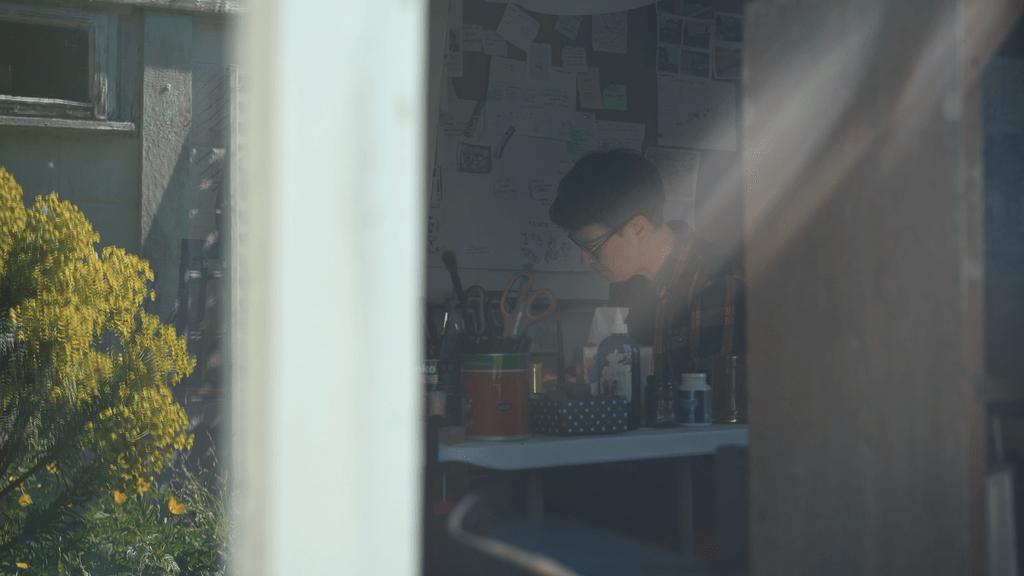
Kate is an animator, illustrator and comic artist telling stories through digital and analogue drawing, as well as film and installation projection. She graduated with an MA Animation from the Royal College of Art and has since produced a wide range of moving image work. Commissions have included: At the Kitchen Table, animating migrant food stories for the Migration Museum; animated portraits of Jack White and The Edge for a guitar documentary; and a video for Liz Green’s Displacement Song, winner of Best Music Video at the British Animation Awards.
One of her ongoing projects is called ‘Meeting Trees,’ in which she travels across the UK meeting and drawing the portraits of heritage trees; highlighting their stories and ability to connect people across the generations.
Animation is very helpful at conveying a more personal story... you can pack a lot into the animated frame. The film I’ve made is a collagic film, using photographs, ink drawings, some of the Robinson’s boxes, and some of the packages... [as well as] printed material from the archive like [The Link] company magazine. The soundtrack of the film is bringing in audio from interviews [with former workers], crafting a picture of what it was like to work there.
Kate Anderson
Robbos credits
A film by Kate Anderson
Audio post production: Fonic
Composer: Graham Slack
Sound Design and Dubbing Mixer: Christopher Swaine
Sound Effects Editor: Cécile Janet
Audio Post Production Coordinator: Eugénie Dunster
Edit Consultant: Anna Dick
Voice of Philip M Robinson: Bill Bingham
Thanks: Zillah Stevenson, Elaine Hancock, and Guy Robinson at Robinson and Sons; Maria Barnes and Charlotte McCrory, Chesterfield Museum Service; Kate Parker; current and former workers at Robinson and Sons