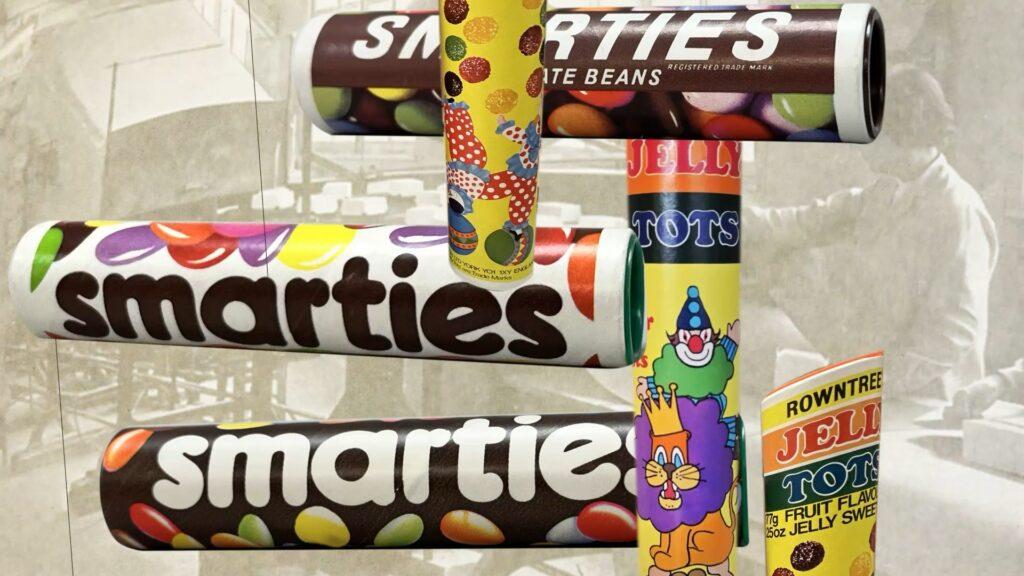
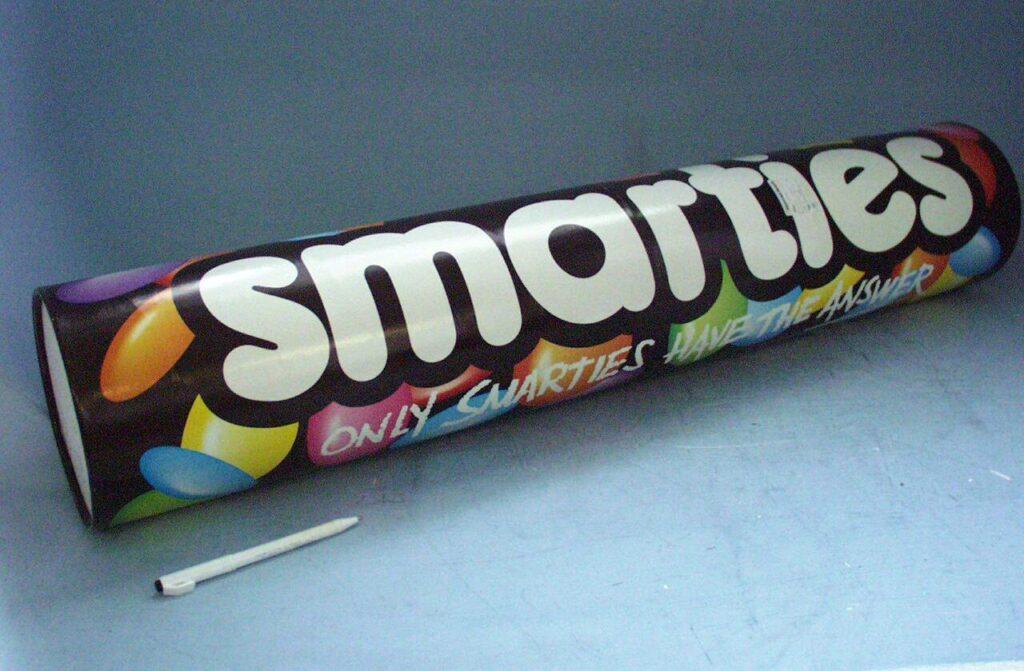
In 1956, Robinson and Sons began producing the classic cardboard Smarties tubes for Rowntree's of York. The design was based on the company’s patented spiral-wound ‘Little John Drum’ box concept, one of its most successful inventions, pioneered by John Bradbury Robinson II in 1924.
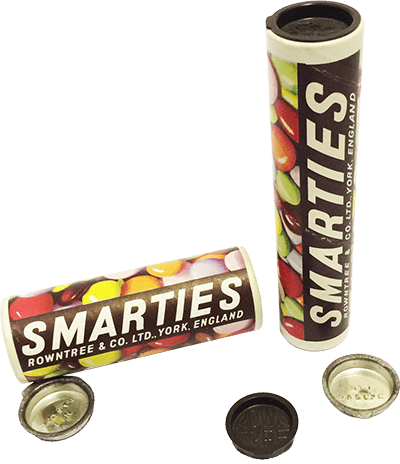
Full spiral-tube winding production began at Robinson’s in 1938, and in 1957, the company purchased its first injection moulding machine for the Smarties tube cap, which famously featured raised letters of the alphabet stamped on top for children collect. The tubes were ‘beaded’ at each end (folded over very tightly) which gave a flexible rim, allowing the lid to be removed and replaced many times without losing fit.
Robinson’s continued to manufacture Smarties tubes at its Wheatbridge factory in Chesterfield until the plant and production lines closed in 1992. Following the end of tube manufacturing at the company, Smarties underwent major changes to its packaging, ingredients, and UK manufacturing over the next three decades.
In 2011, the company sold off its remaining Chesterfield spiral-wound box division to packaging giant Sonoco, and in February 2005, Nestlé Rowntree announced it was retiring the 68-year-old cylindrical tube to be replaced by a lighter, six-sided ‘hexatube’, eventually moving British production to Germany.
John Bradbury Robinson III
Now in his nineties, John is the grandson of John Bradbury Robinson I, a chemist in Chesterfield who founded Robinson and Sons in 1839 after purchasing a box-manufacturing operation, eventually growing the business into a major producer of pill boxes, surgical dressings and medical cotton wool.
“..to get back to the techniques of using cardboard. Fascinating history I've come across there is how my great-uncle Philip Robinson in the 1900s and my grandfather [John Bradbury Robinson I], also my father [John Bradbury Robinson II]…had inventions, both round boxes and folding cartons… A lot of my grandfather’s inventions are [still] national …all over the world, and my father [John Bradbury Robinson II] invented in 1923 [the Little John Drum]… He'd been out shooting one day and picked up a cartridge and said, ‘Wow, that'd make a good end’. So, he wrote to Eley [British manufacturer of firearms cartridges] in Birmingham and said he was interested in shooting, could he come and see how cartridges were made?
They said ‘Yes, do come along’. So, he took his engineer, dressed up in a gamekeeper's outfit, saw them beading cartridges [there], came back and said, ‘Now Oscar, build me a beading machine’. So the first beading machines in this country, probably in the world, produced the beaded drum. And that was a significant development, because when you curled [the tube] in, you could then get a lid that clipped on, and if you remember Smarties, that was the ultimate…. Robinson’s was sending some 5.5 million of those [tubes] into Rowntree’s every week, all produced on machinery developed by Robinsons themselves. It wasn't machines you bought to do it, [Robinson’s actually] developed the means of how you got the mechanism to bead that box.
Interviewed November 2026
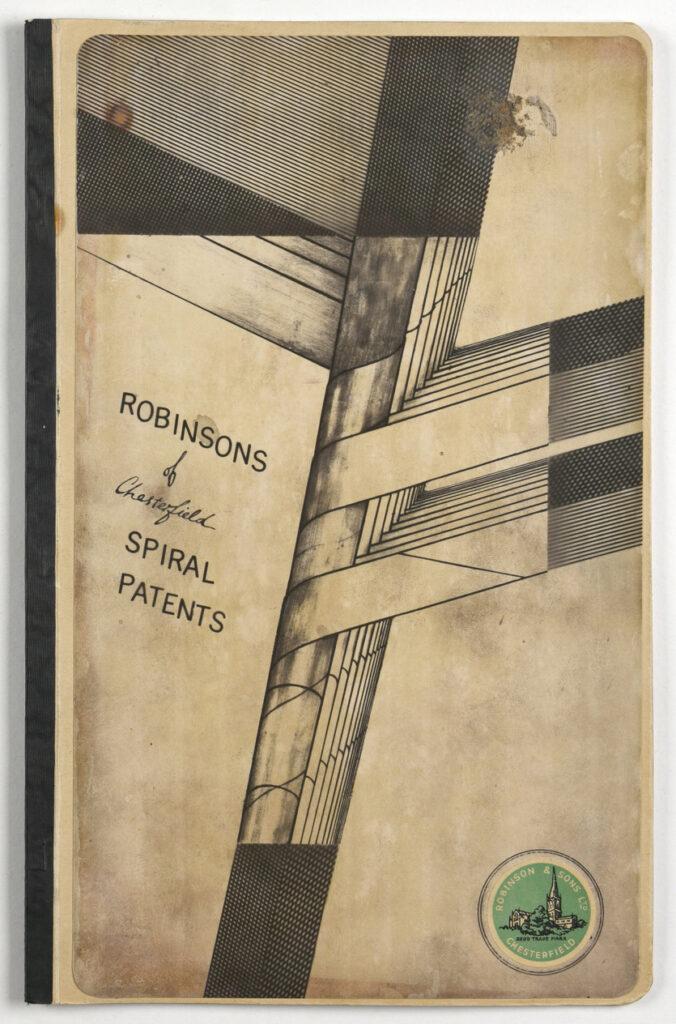
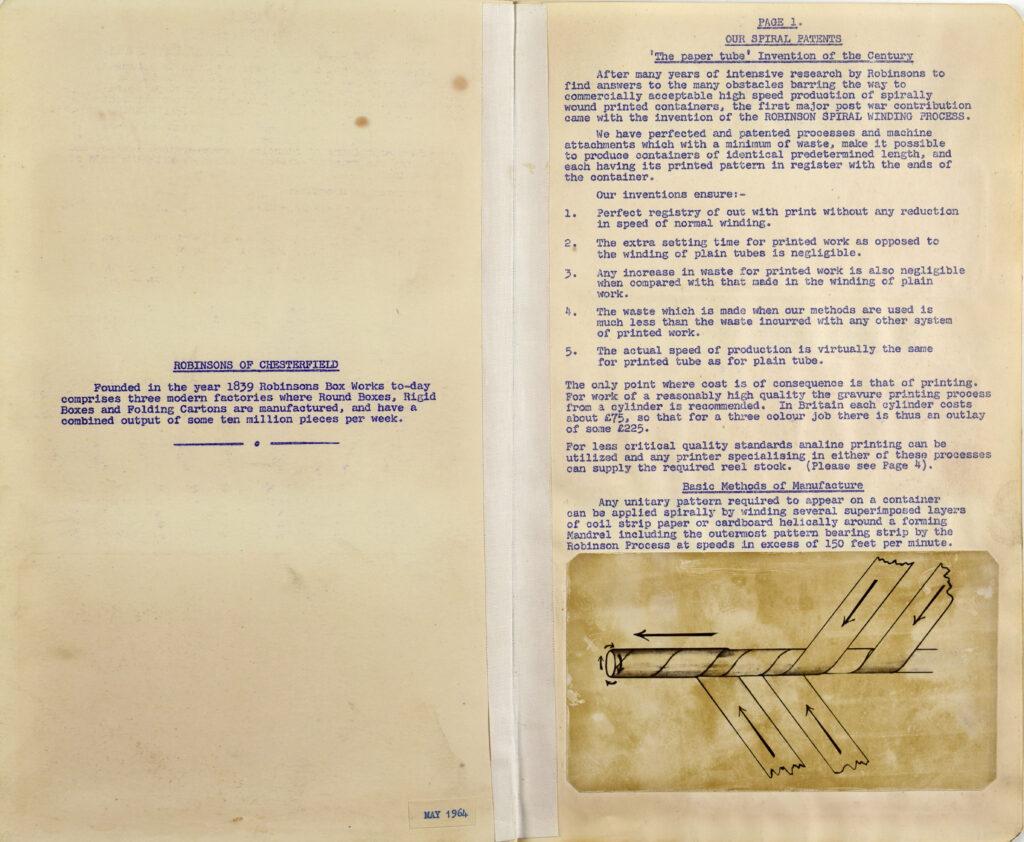
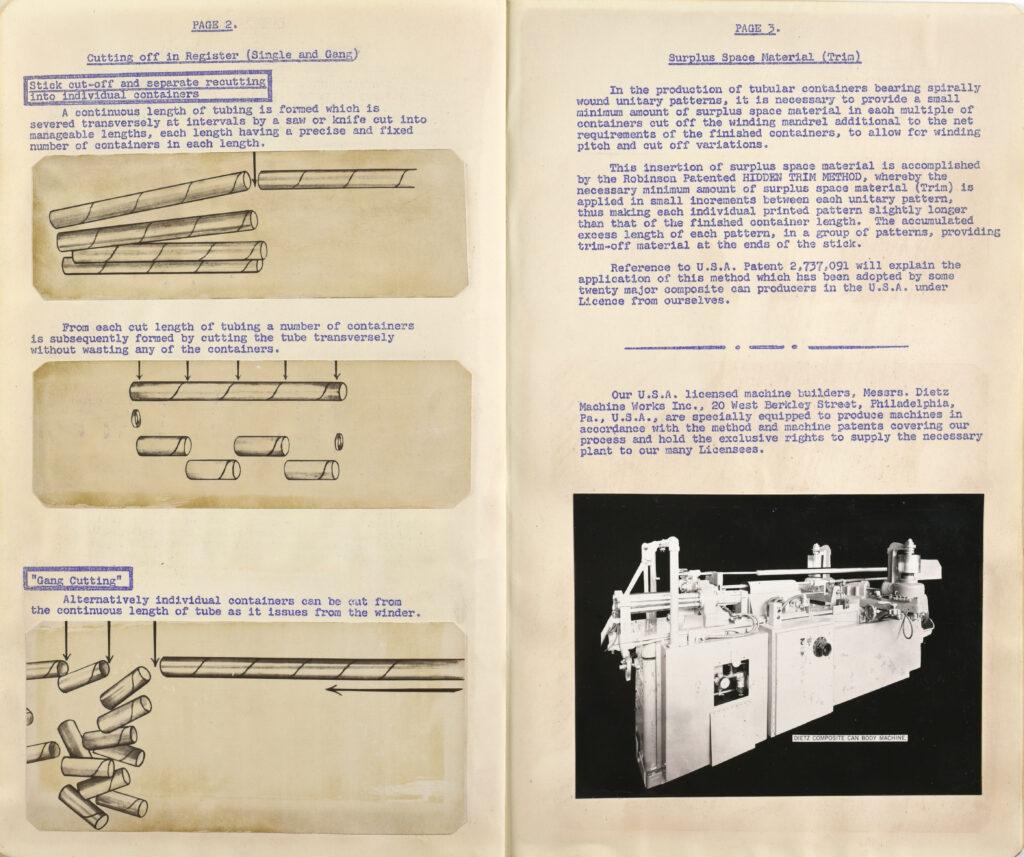
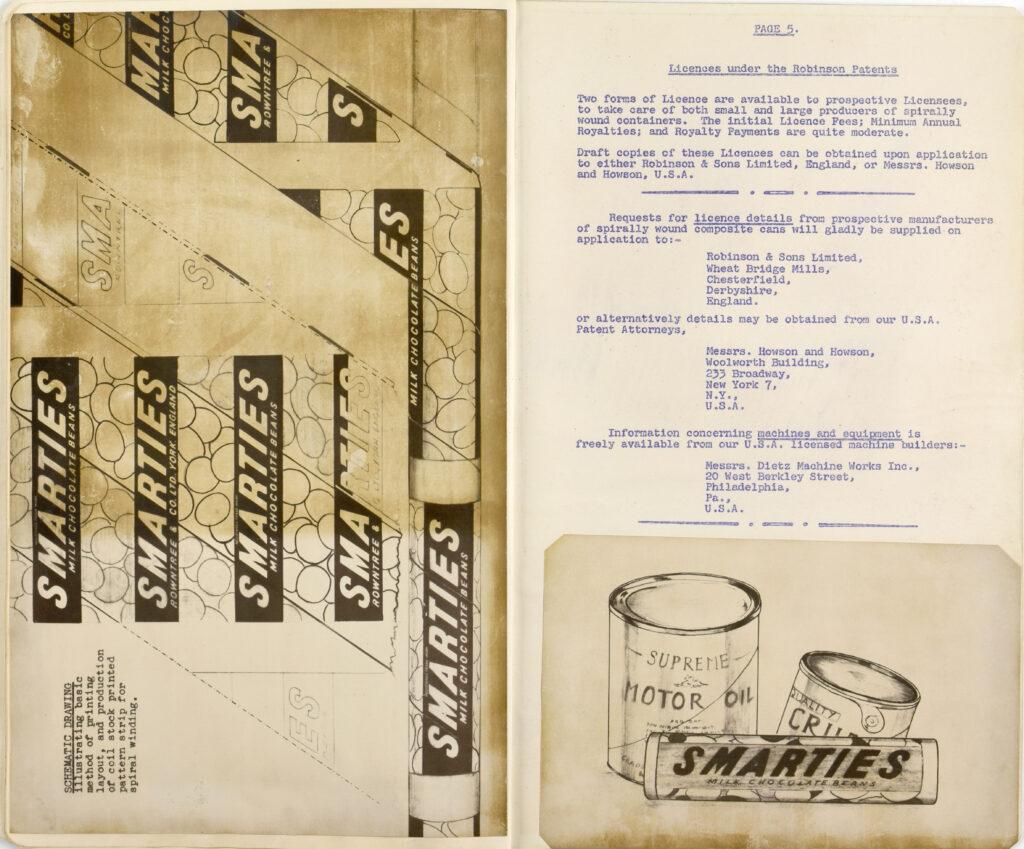
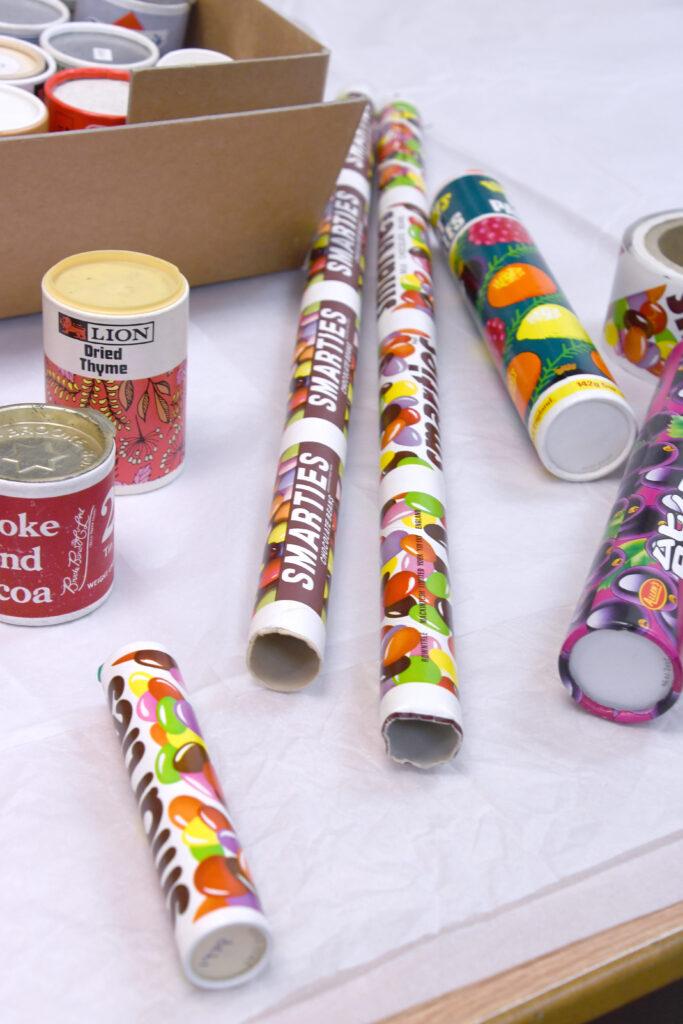
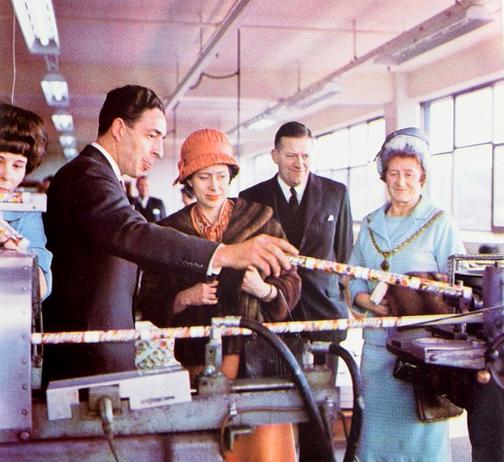
See below for some pages from a 1964 'Robinsons of Chesterfield Spiral Patents' folder.
Diane Milne
Diane worked at Robinson and Sons for 24 years, through the 1970s, 80s and 90s, mostly working in the round box factory on packaging for products including Smarties and Jelly Tots.
In [the factory], the only [machines] that were fully automated were little Smarties. …They used to go upstairs and they made the barrel, it went onto a collator that cut them and it came down through the floor on a chute… where the girls used to thread them.
You kept putting cards in and packing them. You used to pack them in a metal tray, then you turned it when it was done and you had to put a shaker over the top to make sure there were no card [inside], and then you packed them. …You used to tip them down and look to see if there were any upside down, if somebody [had] put a barrel on wrong.
And they were open, there's 340-something in a box, so you got applauded if you dropped it. [Once they were in] you put the shaker on and the [tops were] open for when they [went to Rowntree’s]. [I remember some of the senior employees] got a silver Smarties tube on a stand when [they] retired.
Interviewed March 2026
Read more about Diane's experience of factory life on the production line at Robinson and Sons here.
ROBINSONS of Chesterfield SPIRAL PATENTS (1964)