John Smedley was established in 1784 with the opening of Lea Mill, by Peter Nightingale, a relative of Florence Nightingale, and the company’s namesake John Smedley. The company originally specialised in muslin fabric and spinning cotton.
John Smedley’s son - also named John Smedley - took over operations of the mill in 1825. Using one of the first ever fully fashioned knitting machines, Smedley began producing undergarments.
During the First World War the company undertook contracts to produce military clothing, and this continued into the Second World War. Despite the Great Depression, the company continued to expand and develop new clothing ranges including their three-button Polo shirt which has been in production ever since.
By the 1950’s and 1960’s, John Smedley was being worn by the biggest stars of the day. Marilyn Monroe, Audrey Hepburn, and The Beatles all wore John Smedley knitwear. Every single James Bond in the 007 franchise has worn John Smedley on screen.
Follow this link to find out more about John Smedley’s history.
John Smedley Archive
"Smedley’s collection relates to the production of fine gauge knitwear. We have 13,000 garments – the stars of the show. And everything else that enables them to be created: machinery, hand tools, paper records like accounts for purchasing raw materials, and marketing materials. And the people: personnel and wages records, photographs.
"There’s a huge amount of historic material, both in terms of physical artefacts and documentation, and 16 years after starting the archive, things are still turning up."
Jane Middleton-Smith, Archivist
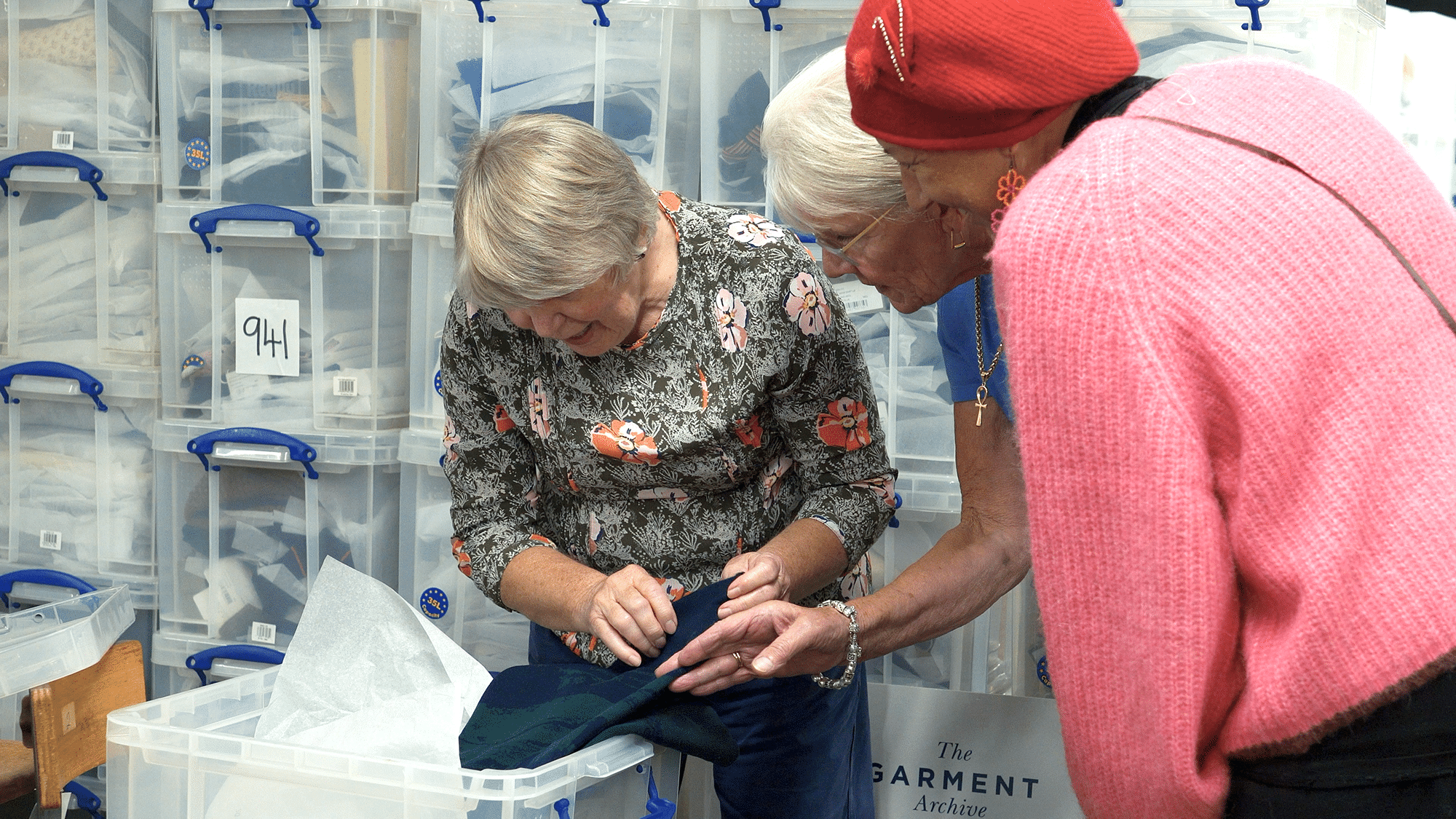
John Smedley Volunteers
Roland Edwards
Maggie Hay
Margaret Maddocks
Sandra Maycock
Iris Smedley
Ann Thompson
Tony Wetton
Volunteer Writing
Sandra Maycock has been a volunteer with the John Smedley Archive for eight years. She was drawn to Smedley’s by her interest in the history of knitwear and her long‑standing hobby of hand‑spinning and knitting her own yarn from raw sheep fleece. Follow this link to find out more about working life at John Smedley from Sandra's interviews with a fellow volunteers Iris Smedley and Tony Wetton; both of whom worked at Smedley's for many years before returning as volunteers after their retirement. Tony is the 'boy' in Kim's film.
Sandra also talks about late colourist, John Mumby, who generously shared his knowledge, understanding and skills with the archive team at Smedley's. Watch a video of John Mumby here, demonstrating colour blending techniques in the WORK Records SCREENING ROOM.
EXPLORE more..
The Hands
An paean to historic working lives
7' 40", 2026
A film by Kim Noce
Online in November 2026
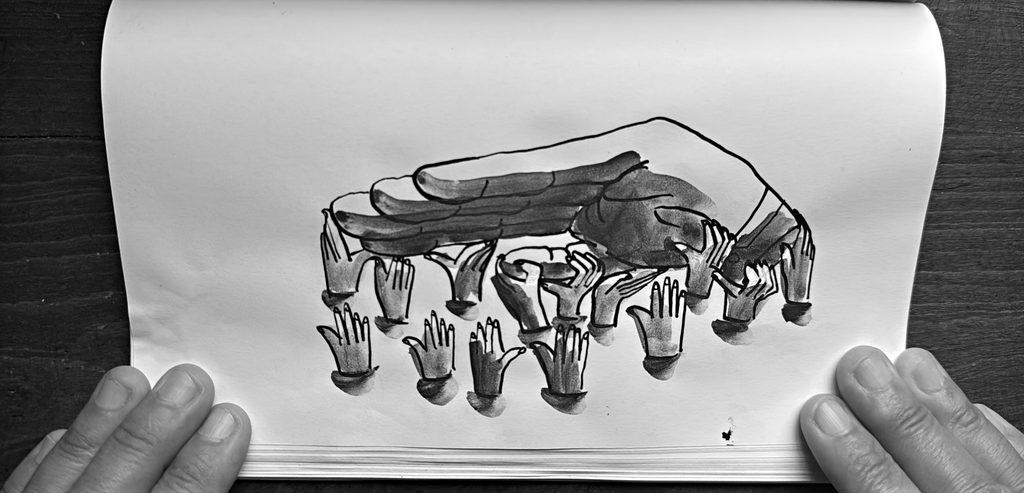
The Hands is a poetic celebration of the people whose lives are woven through work. Moving between past and present, The Hands reflects on craft, resilience, migration and belonging through the recurring image of the human hand. As stories pass from one generation to another, work becomes memory, care and connection. Echoing the refrain “We are the hands”, the film honours the people behind what is made and the traces they leave behind. It reminds us that labour is not carried by wool, machines or industry alone, but by human lives, shared experience and the hands that shape, hold and pass things on.
There is so much in the archive! One of each garment ever made. They've got labels, they've got furniture, they've got musical instruments. It's like a labyrinth, and everything is on site, which is very beautiful.
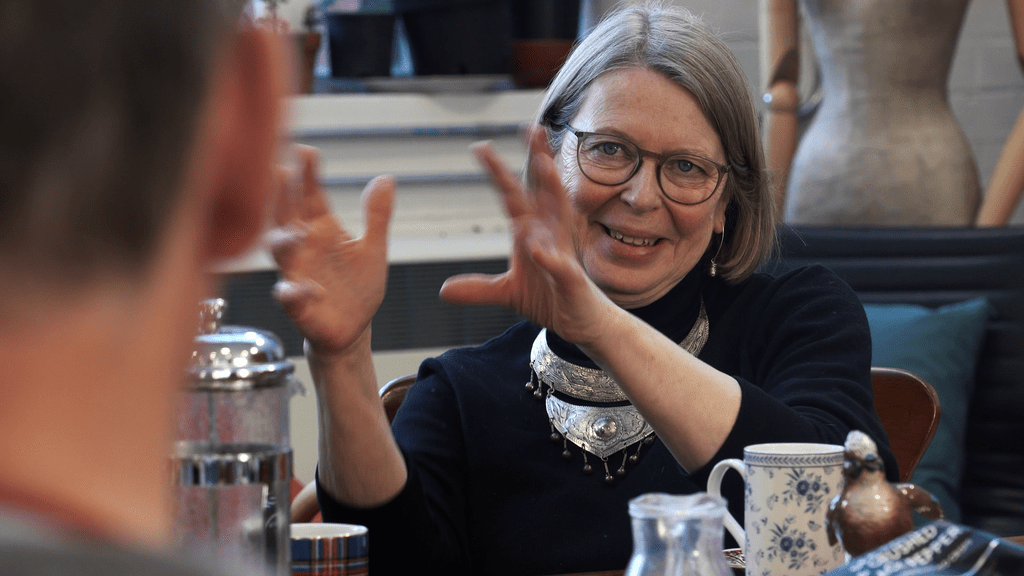
And it’s very welcoming. A group of lively volunteers that meet every week, and that is really inspiring. It gives you a feeling of being part of a little family. Everyone bought their own personality and an interest, their own style of approaching it. And we decided all together the topic of the film. I feel we’re a bunch of directors. It is a very different process to how I usually work. I mean, it's nice to make films, but it's not usually this pleasant.
I think especially in these days where workers’ rights and human rights are a little bit in crisis, looking as Smedley is very reassuring because there is a sense of the community. There is a sense of purpose for the worker. There is a sense of caring with each other and continuity. In the film we wanted to try to represent this relationship - interconnected between the big hand and the small hands, and one cannot survive without the other.
Kim Noce
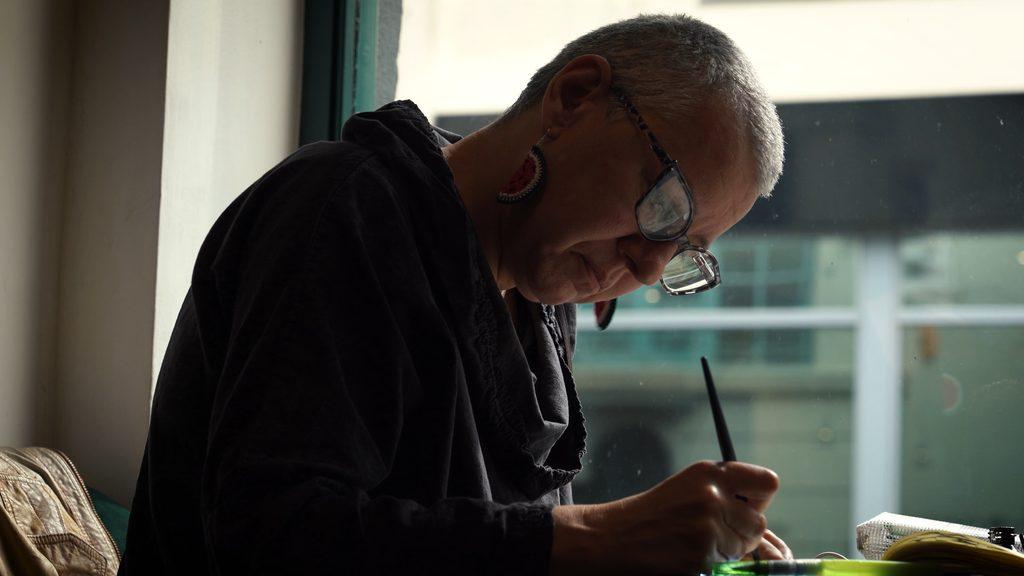
Kim Noce is an Italian artist filmmaker and animator resident in UK. Her work has been screened in major international film festivals, displayed in art galleries, broadcasted in major TV channels, on streaming platforms and winning prizes around the world.
Kim studied Fine Art at the Accademia di Brera in Milan, and has an MA in Animation from the National Film and Television School. at the NFTS. Kim is Course Lead for MA Animation at London College of Communication, University of the Arts, London.
I often think about animation more like poetry, giving an overall picture in a short amount of time and a strong feeling through metaphor and symbols. The style of my film is a mixture of 2D animation that uses ink and pencil… as well as pixilation, photographs and drawings that I’ve made during the process. There is a small song [in the film about] the relationship with Smedley to power, and the relationship with craft, making and working. A three-minute short film cannot really contain it all… a hundred years of history… or even do justice to some of the individual workers, but [it can try] to capture a sense of the company.
Kim Noce
The Hands credits
A film by Kim Noce
Music and Sound by Hutch Demouilpied
Dubbing Mixer by Christopher Swain
Mix Amylo, spoken words and vocals
Andrea Artz, spoken words
Tullis Rennie, spoken words and trombone
Otti Albietz, vocals and drums
Mark Greenwood, guitar
Hutch Demouilpied, vocals, baritone horn and trumpet
Barnaby Templer, Sound Supervisor
Stephen Maxwell, Sound Assistant
Christopher Swaine, Dubbing Mixer
Fonic, Mix
The Hands
He stood by the river
and chose the turning water.
Stone rose from its edge.
The mill began to breathe.
Hands crossed the yard.
Wool passed from bale to palm,
from palm to thread, to cloth, to garment.
We are the hands. River and thread.
Work is a story rarely said.
We are the hands.
Brass filled the yard, a factory band in uniform
They stepped out of line,
All gone, except one drum thrown to the roof
left with dust and sky to remember the strikes.
We are the hands. Strike and seam.
Memory hums inside the machine.
The cloth fitted her. They chose her.
She left with thread in her mind
and returned cutting her own pattern.
Women came from Berlin, carrying the city in their step.
Different hands. Some never quite belonged.
A boy walked in beside his mother, his hand in hers,
learning the weight of wool.
He held it and passed his life there.
One seems larger, many seem small,
but each is steadied by the other’s call.
We are the hands. Past and now.
What holds is held. What leads is led.
Nothing is made by wool alone.
Labour lives in flesh and bone.