Dr Stefan Ramsden
Our WORK Records Project Historian, Dr Stefan Ramsden, is a social historian who researches and writes about working-class history across the mid to late twentieth century. He uses objects, documents and oral histories to uncover experiences of change and continuity across a period in which there were dramatic upheavals in patterns of working life.
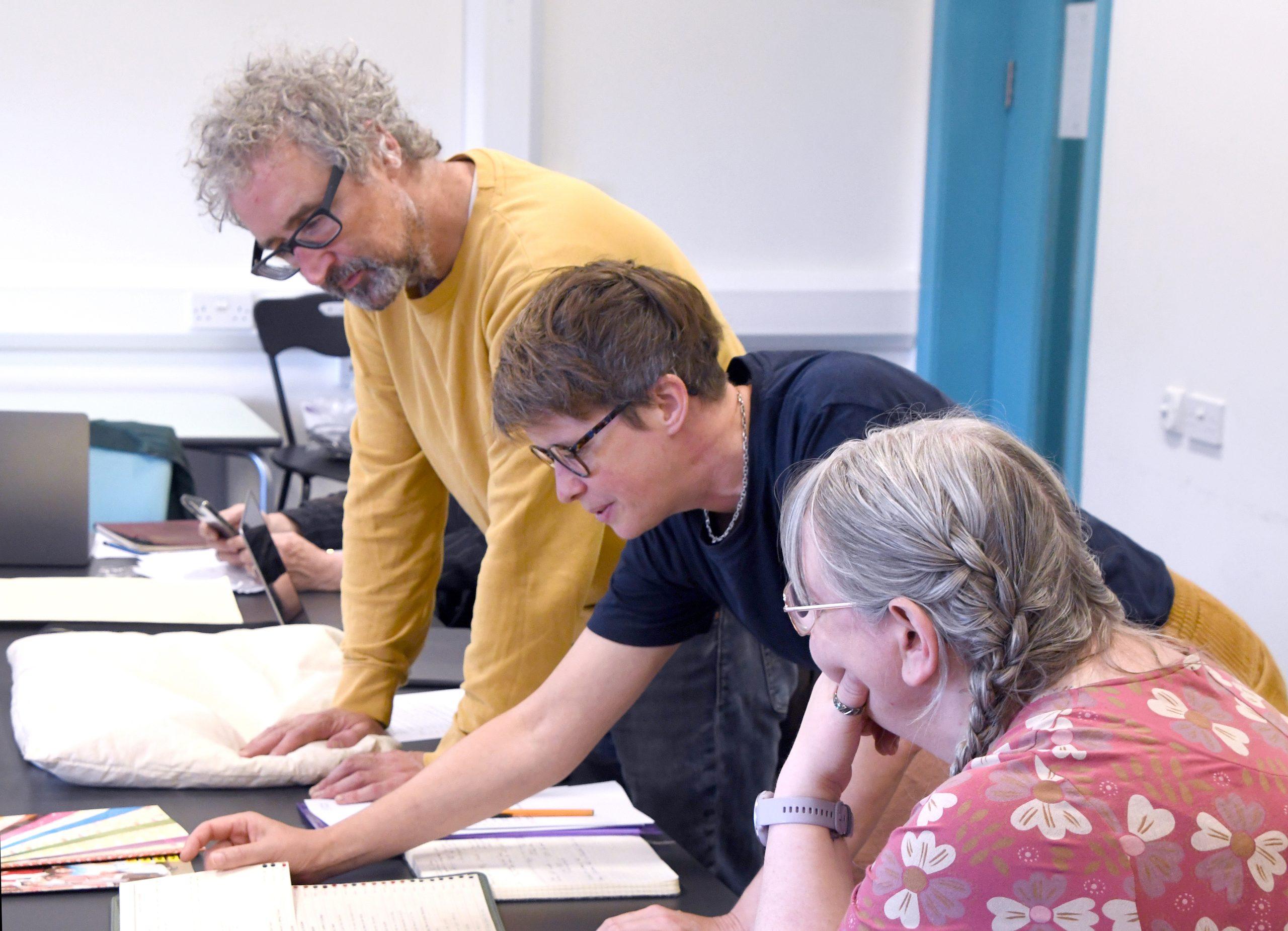
During my first day exploring archival documents with volunteers on the WORK Records project, it was apparent that our project volunteers, like me, were captivated by the sense of lively sociability that historic factories seemed to represent. In September 2025, at Derbyshire Record Office in Matlock, we leafed through old editions of Robinson and Son’s staff magazine, 'The Link', and ephemera from the firm’s 1939 centenary celebrations (a free trip to London for all workers, including meals at Lyon’s Coffee House and ‘a first-class variety entertainment’ in the Albert Hall). What stood out was the ways in which employees not only worked but also played together. Right from the start, we began to think about factories in terms of ‘community’. Later, oral histories and ‘roundtable’ conversations also confirmed that, for many workers, the workplace itself had offered a sense of community.
Both the archival and interview material we examined shows the social and cultural importance of industrial workplaces beyond simply providing a wage in exchange for labour. Historians have noted that rather than a strict division between the spheres of working, neighbourhood, and family life, these spheres were often intertwined for factory employees in the nineteenth and twentieth centuries (Hobsbawm 1984; McKibbin 1998; Ramsden 2017). Some of our oral history interviewees first found employment in one of the three firms (Robinson and Sons Ltd, John Smedley, and Stewarts & Lloyds) because a neighbour or family member already worked there. They recalled how friendships and acquaintances made at work carried over into their lives outside the factory gates, with coworkers going to the pub after work, meeting for shopping trips, and forming relationships that often lasted long after employment ceased.
Social ties were developed and strengthened through organised social and sporting activities – a growth in firms’ provision of sporting and social facilities in the period after the First World War was part of new management approaches which sought to incentivise worker loyalty (McIvor 2000, Crewe 2014, Fitzgerald 1988). Robinson’s Sports and Social Club was established by 1925, and sports and activities referred to in the Club’s reports and in 'The Link' magazine included mens’ and ladies’ cricket, badminton, tennis, bowling, football, swimming, netball, hockey and an Amateur Operatic and Dramatic Society. Our volunteer researcher Adam Cattell at Corby Heritage points to a comparable range of sporting provision established by Stewarts & Lloyds in Corby in the 1930s (Cattell 2026). It is interesting however, that in Robinson’s Sports and Social Club’s tenth Annual Report (1936), the secretary bemoans lack of worker involvement in sports teams; the report claims that shift work deprives some teams of personnel, and that younger employees are keeping them afloat. Nonetheless, the Sports and Social Club continued to be active into the second half of the twentieth century. Our interviewees, who worked at Robinson’s from the 1950s onwards, recalled membership of rounders teams and the Amateur Operatic and Dramatic Society.

The sense of community amongst workers was frequently depicted through the metaphor of the firm as a ‘family’. Sandra, a regular volunteer for the John Smedley Archive, feels that a family atmosphere pervades the firm’s Lea Mills factory today, and it is this that helps to keep her and other archive volunteers engaged. The family atmosphere was further enhanced where workers were actually related to each other. Interviewees Tony and Iris, who had each worked at John Smedley for forty years, had co-workers who were members of their extended families. Iris recalled:
Well, six of my family have worked here… My sisters worked here when they left school - both sisters. Then my mother worked here, my dad worked here. In fact, my parents met here… and now my granddaughter works here, and so does my son-in-law.
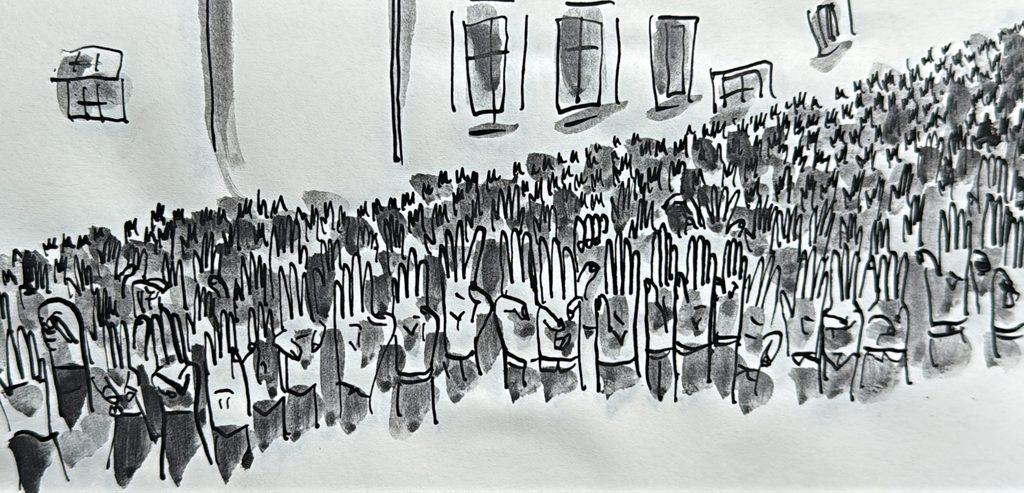
One of our interviewees, Audrey met her husband while both worked on the shop floor at Robinsons; they were told they could work together during courtship “as long as we were a steady couple [and] we didn't mess about at work”. The family metaphor referenced the relationships between fellow workers, but at times appeared also to imply a vertically structured solidarity between workers, managers and owners, reinforced through the paternalistic presence of an owner family. For example, we were told that members of the Robinson family ‘got to know’ their workers, visiting the shopfloor to shake employees’ hands at Christmas, and that they were personally engaged with matters of worker welfare. A former employee at Robinsons fused different strands of the ‘family firm’ metaphor:
Philip Robinson, he'd know if your mum and dad worked here, your grandparents, they'd like to know all your history. He'd probably know everybody by name.
Workers in Robinsons and John Smedley were far from unusual in thinking about their former workplaces in terms of family. Historians have noted this metaphor deployed in interviews and other sources from a wide variety of industrial settings across the twentieth century (for example: McIvor 2013; Ramsden 2017). The metaphor was perhaps most resonant where there was a continuity of employment (often over several generations) in factories strongly embedded in particular places.
These factories inflected the community life not only of employees but also of the wider locality. The Robinson family, like industrialists in many other small towns, had some status locally, and could be involved in leadership roles in the wider community; for example, 'The Link' magazine shows Mr V.O. Robinson giving prizes at Chesterfield School Sports Day in 1930 (Crewe 2014; Ramsden 2017). The influence of a particular workplace on local social, cultural and economic life was as its most extreme in the case of Stewarts & Lloyds in Corby. The steelworks was by far the town’s largest employer, and also the reason for its existence as a town. When Stewarts & Lloyds arrived in Corby in the 1930s, it was a village of 1596 residents; by 1971, the presence of this large employer had grown Corby into a town of 40106 residents (Great Britain Historical GIS Project 2025). Oral history interviews with longstanding residents conducted by WORK Records artist Saul Pankhurst situate the steelworks as the pulse of the town’s collective life.
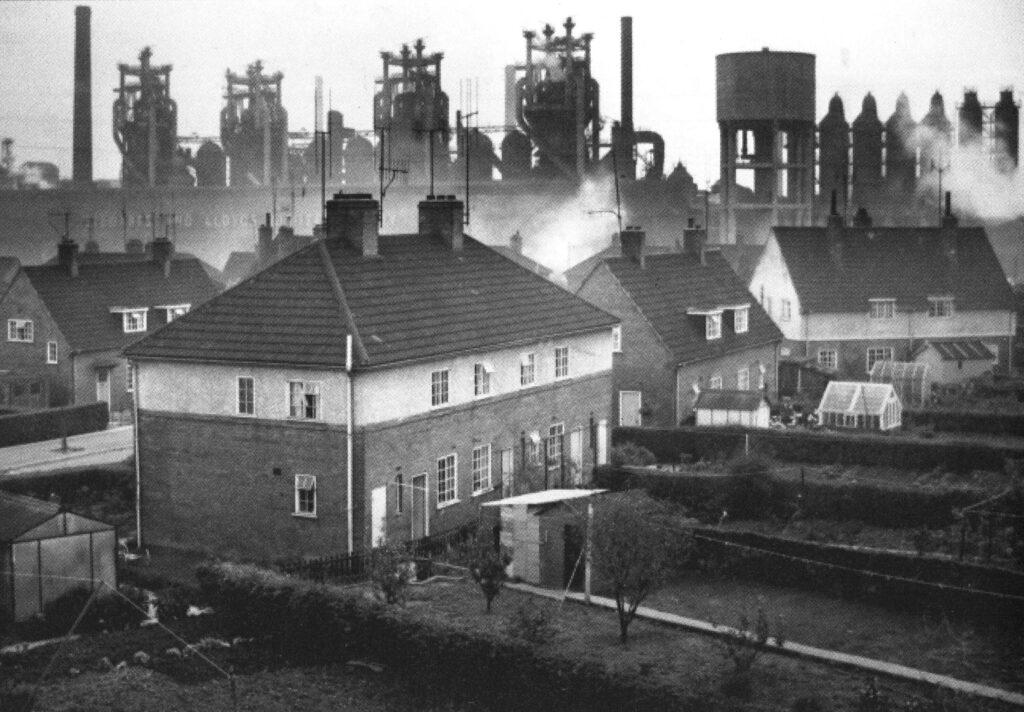
The steelworks physically dominated the town. The ‘Corby Candle’ – a large chimney – was a prominent landmark, with a crowning flame that signalled to local families that their breadwinner ‘was still in work’. The many Scottish steelworkers and their families who migrated to Corby to work for Stewarts & Lloyds brought their national identity with them. Corby became known as ‘Little Scotland’ for its accents, food and annual ‘Highland Gathering’. The wives of steelworkers formed their own neighbourhood clans of mutual assistance and support, taking the bus every Friday to collect wages from the works office in case their husbands were tempted to overspend on drink. The importance of Stewarts & Lloyds was economic (it employed so many residents), cultural (the infusion of Scottish identity) sensory (the work rhythms, noise and smells that dominated the landscape) and social (the works’ social club, the Free and Easy Club for dances on Saturday night, and the many footballing and other sports teams centred on the works). The centrality of Stewarts & Lloyds to Corby makes it possible to describe the town from the 1930s to the 1980s as an ‘occupational community’, comparable to other towns based on a single industry (Hill 1976; Dennis, Henriques and Slaughter 1969; Tunstall 1962; Walkerdine 2010). When Stewarts & Lloyds closed in 1980, Corby residents felt the loss deeply and instantly, and ‘the community spirit weakened’.
Now, we have to be a little cautious before rushing to celebrate the communality of industrial working life in the past. The archival sources which captured our imaginations during the WORK Records research were produced by employers with a strong interest in promoting a sense of community and common purpose amongst their workforce. Robinson and Sons Ltd and Stewarts & Lloyds, like many other industrial workplaces in twentieth-century Britain, used company magazines to define a consensual and harmonious workplace culture. Many firms began producing magazines for their workers in the interwar period, at the same time as they also set up sports and social clubs and facilities. Both can be seen as part of a new approach to incentivising worker loyalty, fostering camaraderie and defusing tensions as union membership expanded (McIvor 2000; Crewe 2014). Certainly, some workers saw the magazines in these terms. A former worker we consulted from Stewarts & Lloyds described the works’ paper, 'S&L News', as ‘propaganda’. Indeed, the oral histories we collected do not only describe industrial work in terms of warmth and communality.
Although comradeship and teamwork was a strong theme in the Robinsons group interview, individual interviews revealed more complex memories. Some of the former Robinson’s shop floor workers we talked with recalled new recruits being bullied by older employees, and remembered tensions around strikes and the sadness and stress of redundancy rounds. Former worker Audrey remembered how, despite a reputation for looking after employees, Florence Robinson (a member of the owning family) ‘wasn't very pleased with me’ when, citing respiratory health risks, she refused to work in a department making sanitary towels during the 1950s.
We must not forget the heavy toll that industrial work could take on workers’ health and bodies. At Stewarts & Lloyds, in particular, frequent accidents could be fatal or life-changing, and industrial diseases linked to chemicals, air pollution and heat were common. It is also important to note that our interview samples were small (WORK Records did not set out to be a fully-fledged oral history project), and so there were some obvious gaps in representation. For example, we did not hear from any ethnic minority workers, who may have had different perspectives on workplace culture; nor was it possible to capture the experiences of temporary workers with perhaps less attachment to the firms or to their co-workers.
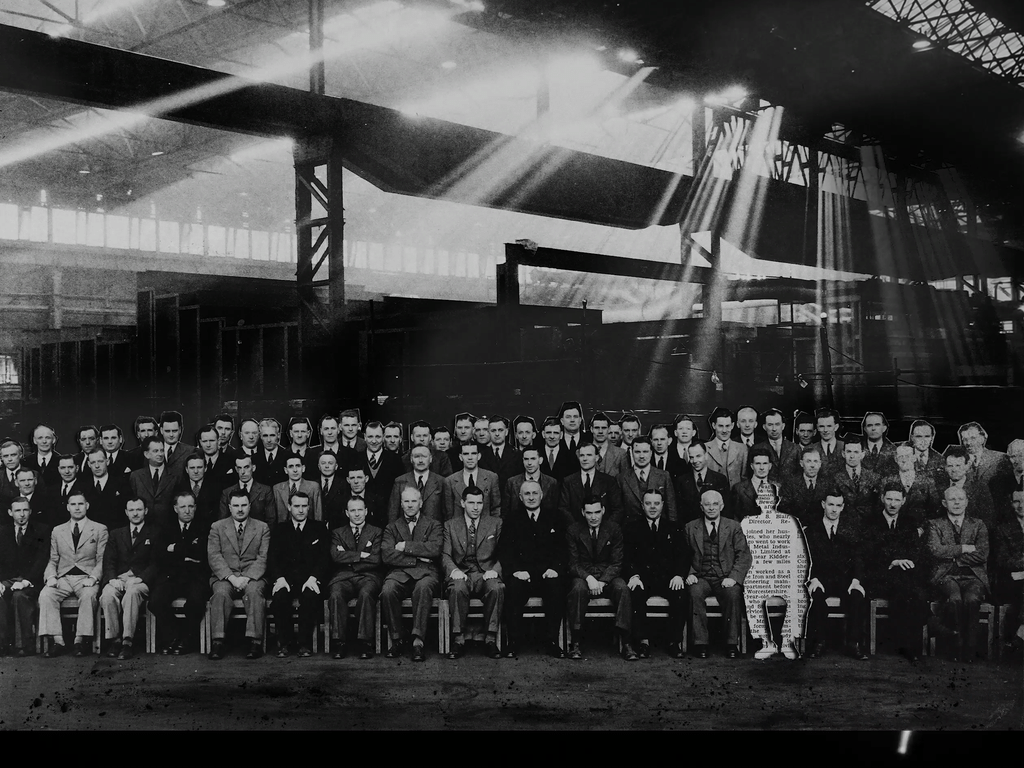
Contemporary observers suggested that the intermeshing of communities of work and non-work loosened in the period after the Second World War: rising living standards in what was called the ‘Age of Affluence’ (roughly speaking the 1950s and ‘60s) enabled workers to pursue more individualised leisure without relying on facilities and funding provided by employers; the growth of new forms of home-based leisure (most obviously television) led people away from works-based sociability (Zweig 1961; Goldthorpe et al 1969). The picture is more complex and varied than has often been acknowledged, with differences across geography as well as between workplaces. Certainly, my own oral history research with working-class communities in East Yorkshire corresponds with what we’ve been discovering through WORK Records. British industrial employment continued to grow until 1966 (Howlett 1994), and the abundance of this kind of work gave some communities an unprecedented degree of stability in the immediate post-war decades. In these locales, industrial workplaces continued to be key contexts for sociability and were an important constituent of local identity (Ramsden 2017; see also Crewe 2014). Works sports and social clubs evolved to accommodate new leisure and sporting interests. Robinson’s 'The Link' magazine shows the addition of new Sports and Social Club sections, including archery (1960), a motor club (1961), and judo (1961). Historians have noted that social and sporting provision was not simply bestowed by employers – clubs were often established by employees themselves who then sought the support of their employers (Crewe 2014). As long as both bosses and workers were getting what they wanted from these arrangements, they continued.
Of course, the closure of many firms as the British economy pivoted away from industrial production across the later 20th century brought an end to much of the communal culture discussed here. Stewarts & Lloyds closed in 1980, and employment at Robinson and Sons Ltd in Chesterfield contracted significantly in the later 20th century, though John Smedley continues to employ a large workforce in its Lea Mills factory. The legacy of the former occupational community in Corby continues through sports teams that still bear the steelworks’ name; in Chesterfield, retired members of staff kept Robinson’s Amateur Operatic and Dramatic Society going as a performing outfit until the disruptions of Covid in 2020, and still meet socially today.
CONCLUSION
During the research phase of WORK Records, we consulted archives and collected interviews with former workers that shed light on the community cultures of three East Midlands industrial workplaces across the twentieth century. These were sites where workers got to know each other and made friends and acquaintances that carried over into their lives outside of work. For many employees, membership of works social and sporting clubs reinforced the bonds made on the factory floor. Our interviewees recalled a ‘family atmosphere’, especially where, as at Robinson’s and John Smedley, a single family ran the firm. From the 1930s to the 1980s, our third workplace, Stewarts & Lloyds, shaped the social and economic life of Corby to the extent that it was appropriate to describe the town as an ‘occupational community’.
But these sources frequently gave us only part of the story. Conversations revealed that workplaces also contained tensions, including conflict between workers and owners and amongst workers themselves. We were told, particularly by former employees of Stewarts & Lloyds, that industrial work could be hard, dirty and dangerous. Nostalgia for the communities that we imagine around historic industrial workplaces is perhaps a function of our post-industrial age, when the continuities and certainties of work in longstanding firms are harder to find. On that day at Derbyshire Record Office, at the start of the WORK Records project, many of us felt an emotional response whilst looking through the brochures of Robinson’s centenary trip to London and reading work’s magazine articles about sports and social clubs, weddings and retirements. These emotional responses motivated us to discover more about these firms, and led us to connect with workers who had lived experience of the industrial world we glimpsed through the documentary sources. What were initially nostalgic responses to the past have therefore led towards deeper, more complex and more grounded engagement with history behind the records.
REFERENCES:
Cattell, Adam (2026) ‘Stewarts and Lloyds Sports Clubs’ WORK Records blog: https://workprojects.org.uk/weight-for-height
Crewe, Steven (2014) ‘What about the Workers? Works-based Sport and Recreation in England c.1918–c.1970’, Sport in History, 34:4, 544-568.
Dennis, Norman, Fernando Henriques and Clifford Slaughter (1969) Coal is Our Life: An Analysis of a Yorkshire Mining Community, 2nd edition, London: Tavistock.
Fitzgerald, Robert (1988) British Labour Management and Industrial Welfare 1846-1939, Beckenham: Croom Helm.
Goldthorpe, John Harry, David Goldthorpe, Frank Bechhofer and Jennifer Platt (1969) The Affluent Worker in the Class Structure, London: Cambridge University Press.
Great Britain Historical GIS Project (2025) ‘Corby Parish total population’, A Vision of Britain through Time, University of Portsmouth. Available at: https://www.visionofbritain.org.uk/unit/10267729/cube/TOT_POP [Accessed 12 May 2026].
Great Britain Historical GIS Project (2025) ‘Corby built-up area total population’, A Vision of Britain through Time, University of Portsmouth. Available at: https://www.visionofbritain.org.uk/unit/13510052/cube/TOT_POP [Accessed 12 May 2026].
Hill, Stephen (1976) The Dockers. Class and Tradition in London, London: Heinneman.
Hobsbawm, Eric (1984) Worlds of Labour, London: Weidenfeld & Nicolson.
Howlett, Peter (1994) ‘The “Golden Age”, 1955-1973’, in Paul Johnson (ed.), Twentieth Century Britain: Economic, Social and Cultural Change, London: Longman, 320-340.
McIvor, Arthur (2000) A History of Work in Britain, 1880–1950, London: Bloomsbury.
McIvor, Arthur (2017) Working Lives. Work in Britain Since 1945, Houndmills: Palgrave Macmillan.
McKibbin, Ross (1998) Classes and Cultures: England 1918-1951, Oxford: Oxford University Press.
Ramsden, Stefan (2017) Working-Class Community in the Age of Affluence, London: Routledge.
Tunstall, Jeremy (1962) The Fishermen, London: MacGibbon and Kee.
Walkerdine, Valerie (2010) ‘Communal Beingness and Affect: An Exploration of Trauma in an Ex-Industrial Community’, Body and Society, 16:1, 91-116.
Zweig, Ferdynand (1961) The Worker in an Affluent Society. Family Life and Industry, London: Heinneman.