Martyn Stonehouse
Martyn Stonehouse was a WORK Records volunteer researching the Robinson and Sons archive at Derbyshire Record Office. As a heritage sound artist and composer, Martyn’s research practice often focuses on Derbyshire histories, and he’s been working on a visual arts and sound project (Megalithic Transport Network) in the Peak District for some years now. He has a keen interest in digital preservation and archiving and a background in sound and audio production. Martyn grew up in Chesterfield and continues to live there today.
I started volunteering with the WORK Records project in September 2025, and was an absolute pleasure getting to grips with the wealth of fascinating information held in the archives at Derbyshire Record Office. During my time researching the Robinson and Sons’ collection, I began to see references to ‘PMR’ in many of the catalogue items I was requesting, and it soon became obvious that one Robinson's family member in particular seemed to be at the heart of the philanthropic endeavours I’d been reading so much about.
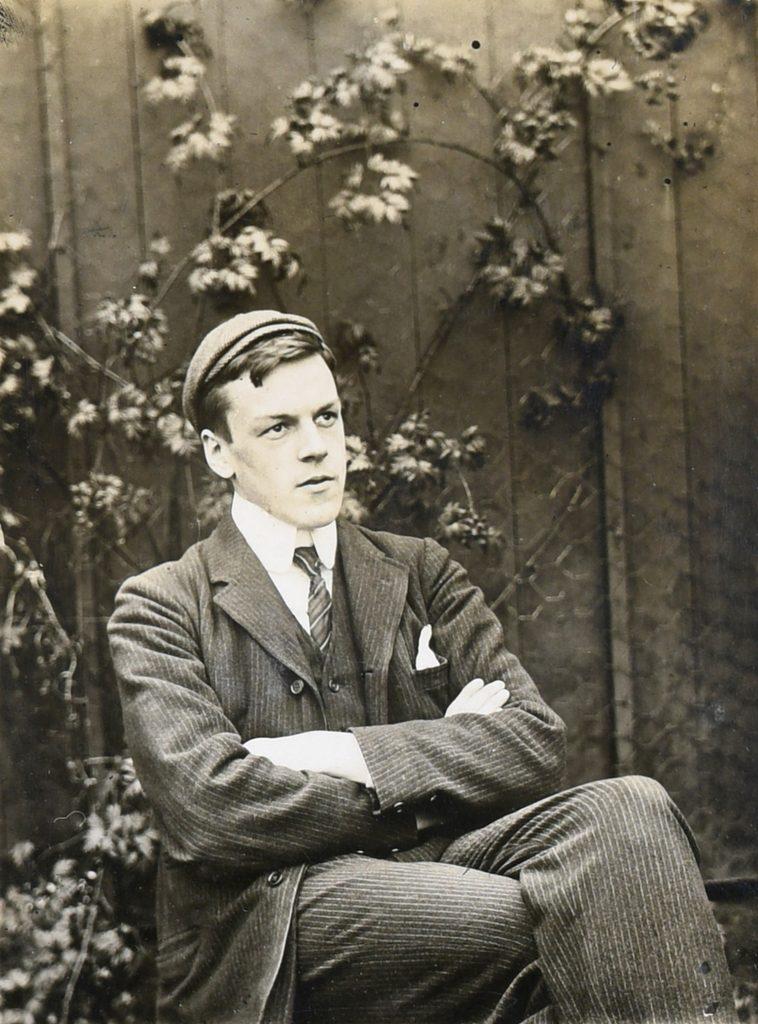
Without going into the full history of the Robinson’s family, Philip Moffat Robinson (1882-1978) was a prolific part of the company's activities roughly from the 1910s onwards, particularly when it came to employee welfare and developing new schemes to boost a sense of empowerment in their workforce. He was heavily involved in the creation of the Wheatbridge Housing Association, a subsidised housing scheme close to many of the Robinsons’ works in Chesterfield. This encouraged employees to buy shares in a modern property of their own with room to grow, coinciding with a national post-war push for new homes.
Philip also presided over the development of the Holme Brook Works Council, designed to give employees a fair say in important decisions and everyday tasks, with representatives from the various different departments meeting regularly to discuss their concerns. He also created the muniments room - a collection of the Robinson’s family and business history located in the company offices in Brampton and Chesterfield, which over time formed an invaluable archive of materials and objects, some of which are now in storage at Chesterfield Museum.
Philip Robinson was born at Goldwell House on Ashgate Road in Chesterfield, now a daycare centre and nursery, although still looking charmingly similar to the photos I found in the archive. Philip recalls the road outside being little more than a dirt track, and although the house was newly built by his father, Charles Portland Robinson, it was apparently lacking in some of the facilities that Philip would have seen introduced as he grew up.
Some of my favourite items from the Robinsons’ catalogue are those of Philip’s, which often show great consideration and thoughtfulness when making notes and organising information - he seemed to be genuinely interested in bringing about positive change for the future.
Philip Robinson became Mayor of Chesterfield in 1928, after taking on various different roles within the council up until that point, including Chairman of the Tramways committee, as well as those of education, water, housing and electricity. In a celebratory issue of the company magazine ‘The Link’ from Christmas 1928, A.E. Webster writes an enthusiastic profile of the new mayor, someone Webster clearly held in high esteem. He talks about Phillip’s “untiring energy” and “keen business insight”, but also alludes to his more personal qualities including “everything in connection with the welfare and social wellbeing of the workers”.
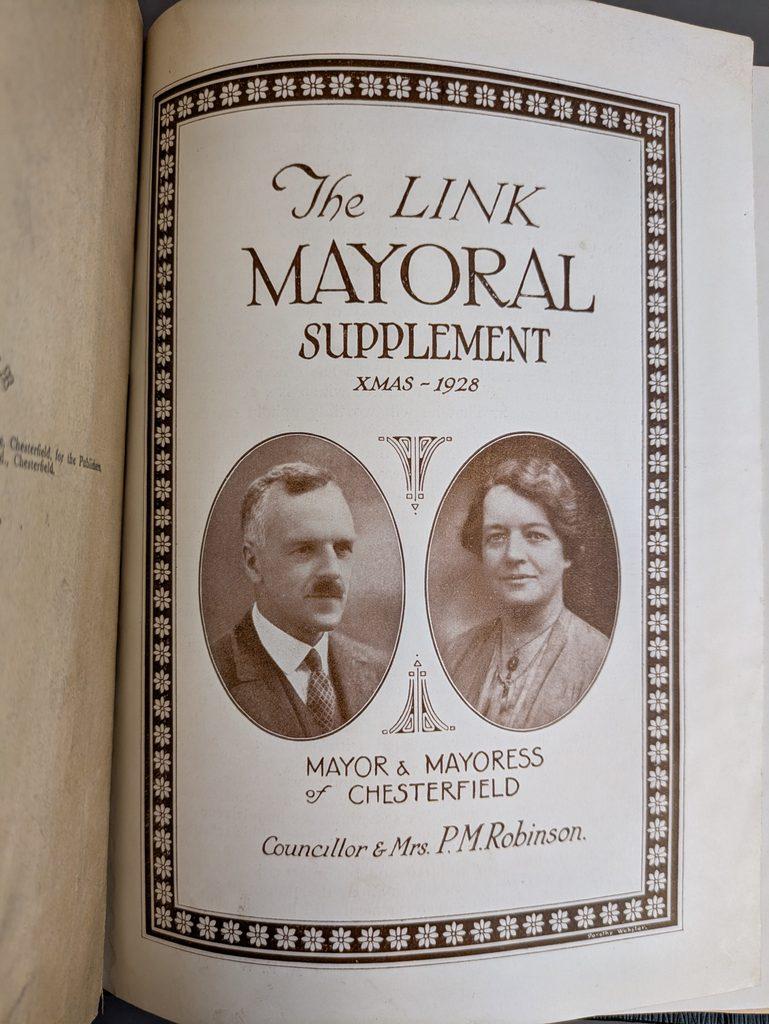
He goes on to mention Philip’s “intensely human personality” and “an almost perfect blending of mental and moral natures”. It paints a wonderful picture of ‘PMR’ at this time, but it’s only when I read Philip’s own writing that these traits began to paint a vivid picture of someone who was clearly passionate and invested in his life, family, business and being a part of the community in which he lived.

My favorite find from the collection so far is a small notebook belonging to Phillip, dated 19th September 1918, in which Philip contemplates his aims in life, writing with an honesty and clarity that I’m sure we could all use in our busy lives. This feels like a rare glimpse into someone’s past that, although at home within an historic archive, is also entirely personal and connected to the family's ongoing story. It was truly a pleasure to read.
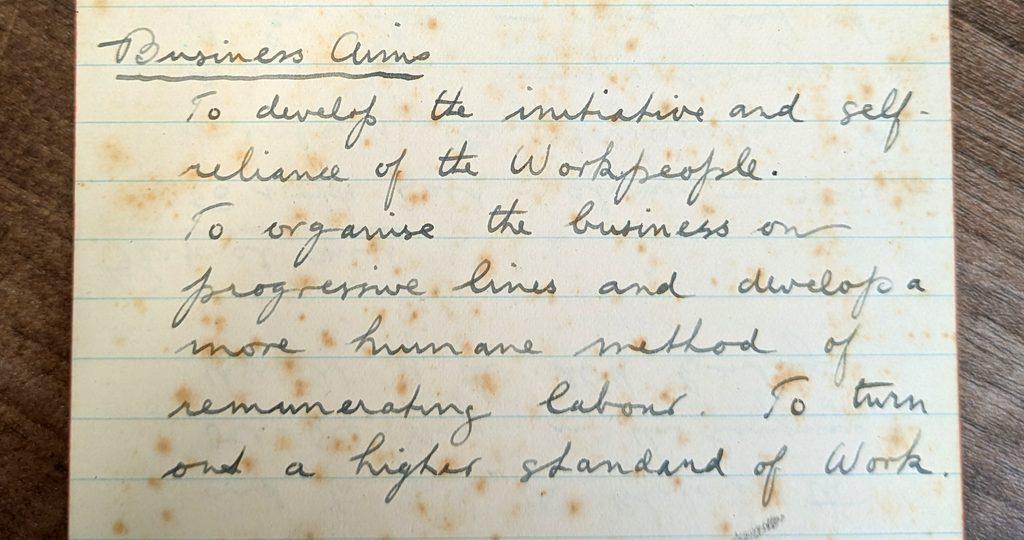
In the notebook, Philip talks about his desire to be a loving husband, a good father and a kind employer, to develop the initiative and self-reliance of the workers, and in a final thought, he talks about enjoying life, making the most of his time and money before retirement, or “perhaps the grave”. This awareness of his own mortality combined with the reflection and forethought that Philip has given this notebook is wholly endearing and I feel this speaks to his character in a way that’s hard to surmise.
It’s given me a wonderful glimpse into the life of someone who clearly made a significant impact on those he knew, both in his personal life and through his work with the family firm. This small and personal reflection perhaps gives a rose-tinted view of the past, as so often happens when working in the archives, but in the short time I’ve been researching Robinson and Sons, I feel that Philip Robinson was someone from whom I could learn a lot, particularly in respect to his outlook, choices and actions.