Dr Stefan Ramsden, WORK Records Project Historian, supported the artists and volunteers throughout their research, advising on the practice of history, undertaking oral histories, and the importance of care in historical interpretation.
Stefan researches and writes about working-class history across the mid to late twentieth century. He uses objects, documents and oral histories to uncover experiences of change and continuity across a period in which there were dramatic upheavals in patterns of working life.
In conversation with Animate Projects' Director, Gary Thomas, Stefan told us about what motivates him as a historian...
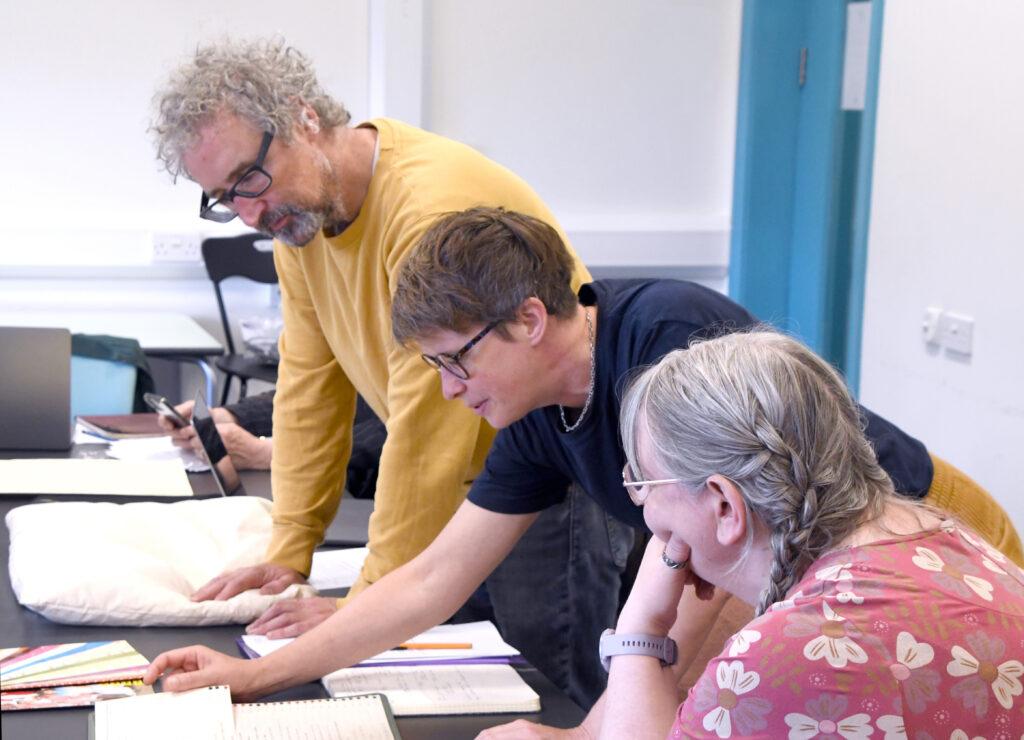
Every historian will tell you that they always loved history from being very young. You know, I used to go to castles with my parents, and my mum took me to the Jorvik dig before the Jorvik Centre in York. There was a great big excavation there of Viking York and that made a really big impression on me, but I always loved history, like a lot of small children, historic stories and adventures. I always picked history as the option, so I did A-level history, [then] history at university. I worked for a bit as a local journalist and [doing] a few other things, removals etc, and after that, a friend of a friend who worked in a museum got me volunteering and I moved into museums. Most of all, I loved the research aspects of that - researching new topics for exhibitions and working with volunteers as well. And then the opportunity to do a PhD came up [at the University of Hull] a few years down the line, building on some work that I'd done in museums, so I took the leap and left secure employment for a life of kind of casual work and temporary contracts in academia. Then [I worked in] various teaching and research posts, and in between that, freelance work, so working with local councils and [other organisations] on research and heritage projects.
I'm very interested in how groups and communities live together and change over time. Social history was very big in the 60s and 70s; it was a new thing. It was history from below, ordinary people's stories, the stories of working communities and things, and that's always really excited me, even though it became less fashionable in the 90s and 2000s. It was kind of replaced to some extent with cultural history, which is all about how people speak… about language and how the past is constructed through narratives and discourse and those kinds of things. Whereas social history crosses over with social science methodologies, …things like surveys, …quantitative as well as qualitative, evidence. So I've always been more on that social history side than on the cultural history side.
The kind of history I've done is trying to uncover everyday life, patterns of living in the past and patterns of work, people's social lives. How do people work together, live together, play together, and how did that change? So the subject I chose for my PhD was looking at the post-war, what was called the Age of Affluence, when living standards rose very markedly, more dramatically than ever in Western history before that. People were able to buy houses, they were able to go on holiday, their material standards of life improved rapidly in the 20-30 years after 1950. And I was looking at what that [meant] for working-class cultures of sociability and work. There's this classic image of the working-class community [being] very close-knit, everybody helping each other. How did affluence affect that? When people could afford holidays and cars, did it affect that kind of communal culture? So I was looking at that, and I was very much using the kind of records that we've used in WORK Records.
I was using local newspapers and works magazines, so you can see what kind of activities people are doing. I was using oral history a lot as well, so lots of interviewing, just to try and uncover those patterns of everyday life, because if you don't ask people, often you don't know. Even today, much of social life isn't really recorded in any way. The archives still contain the records of literate people, educated people, wealthy people to a much greater extent than working-class lives. If you go to an archive with a load of diaries your grandma wrote, [for example], just an ordinary person living in whatever town, they’d like to have them, but they [won’t have] room [to take them] because there's [just] so much of that material. There are [still] selection processes in archives that mean certain people's stories are privileged above others, and I think there is a need for social history and a need for historians to try to get to that ordinary experience - oral history is still really important.
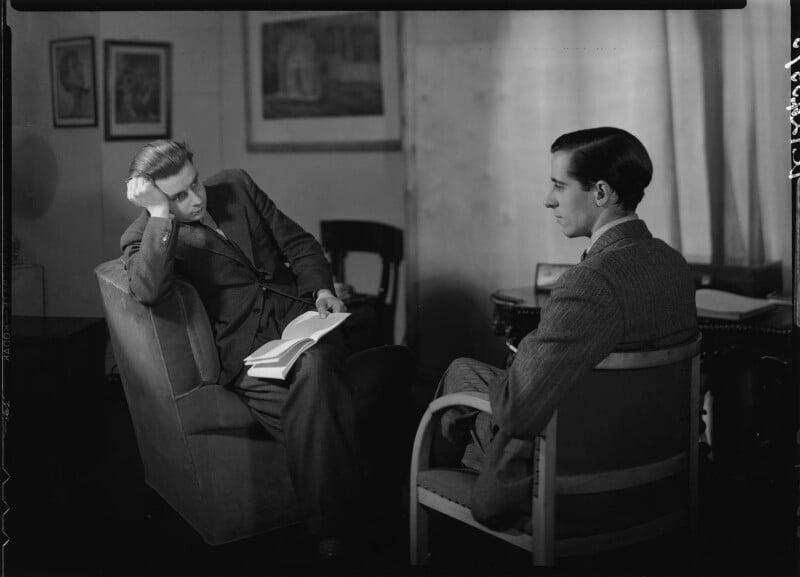
Mass Observation had a similar purpose to [that] of social history and predates the boom in social history [which] became a popular term in the 60s and 70s. Mass Observation was about recording what was happening at the time, about people submitting their personal experiences. [It was established in 1937 by anthropologists Charles Madge, Tom Harnett Harrisson and Humphrey Jennings], and they were interested in applying these kinds of anthropological perspectives to everyday life in Britain. They used to go to pubs and watch people and write lots of notes about how people behaved [there]. There are some really interesting descriptions in some of their early publications about how people in a pub would drink level, so working men in the pub would always make sure they had the same amount of beer in their glasses, that was a kind of thing they observed. [They wanted to look at culture closer to home] and that led to call outs for diaries and people would send things in. [There’s a] huge collection in Sussex of accounts of everyday life. But again, it tended to be literate people who would respond, ..so there's definitely a middle-class bias with that.
I think, as a working-class academic, somebody who really identifies with working-class, I still believe in what E.P. Thompson said about “The enormous condescension of posterity” in his landmark social history book, The Making of the English Working Class (1963). He used the phrase to criticise the tendency of people in the present to look back at past generations - especially working-class people like everyday weavers and Luddites - with arrogance, pity, or judgment. They were patronised by history and not understood in their own terms. That does really resonate with me. I've worked in factories and I feel I want to tell ordinary people's stories, my own story, I suppose, with respect, and avoid that kind of condescension. That’s a strong motivation, just to restore ordinary people's experience to the historical records, and I still think it gets overlooked.
Interviewed August 2026