We talked to our three archivist partners about themselves, their jobs, and their collections.
Billy Dalziel, Heritage Officer, Corby Heritage Centre
Corby Heritage Centre opened in 2011, and the collection was literally just what we had in the council offices. But once people knew I was building a collection, people started to donate.
We've got the steelworks, Corby Pole Fair, the new town history, and the original part of the town - people forget that the village has been here over 1,000 years.
It’s the stories that the objects tell. How is a drainpipe an interesting object? It’s part of the WWII Pluto pipeline. Or a computer, from a manager at the steelworks, that looks quite innocuous but is one of the world's first computers sold to the public. It’s the fascinating stories and anecdotes.
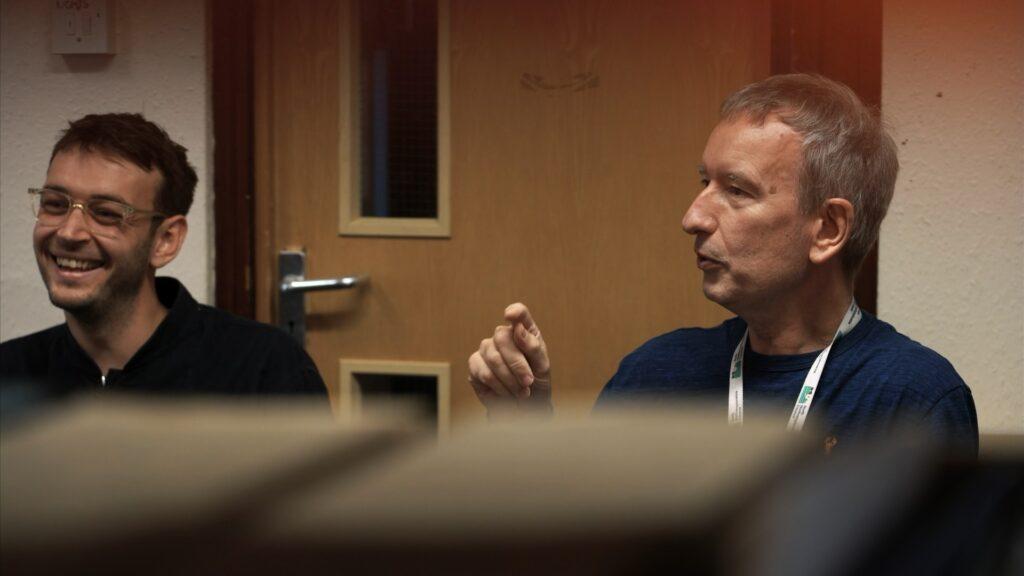
I came to work in heritage relatively recently, having always had an interest in history from a young age and going on to study the subject for my first degree at the University of York, and later for my Master’s degree in Museum Studies at the University of Leicester. I then spent ten years in the wilderness, working in jobs that had nothing to do with history; in warehouses, car parts factories, lorry driving – I even got an HGV Class 1 licence. I got to a point where I decided it might be my last chance to do something in heritage, and I applied for an entry-level job with Corby Heritage Centre and never looked back.
When I started as Heritage Officer in 2007, there was a good arts and cultural scene in Corby, but there was no museum, no archive and no collection; literally nothing to record or disseminate the history of our town other than a few dedicated local historians, and no repository for information. Anything to do with Corby was filtered out to places like Northamptonshire Records Office, but nothing stayed in the town. The collection that exists now has been ten years in the making, and I feel almost like a pioneer in some respects, having been involved in its set-up since the very beginning.
Early on, there was a period where we focused on community work, events and talks etc, and we were only able to start really building a collection once the Heritage Centre opened in 2011. I quickly realised that much of the town’s historical material was scattered all over the place; some things were unreachable in private hands, and a lot had been kept in storage by the Council, spread out in different storerooms across town. We first began to accumulate material from the Council offices – paintings, official documents about the town’s history, a charter signed by Charles II – and a lot came over from the old industrial heritage centre at nearby East Carlton Park, where material relating to Stewarts & Lloyds had been housed following the steelworks’ closure in 1979-80.
As time went on, and we were awarded Arts Council England Museum Accreditation in 2017, some nice donations started to appear. A manager from the steelworks contacted me about a single piece of a computer; quite innocuous at first glance, but absolutely fascinating when you discover its backstory as one of the world's first, if not the world's first, commercial computer ever made. Then one of the Council admin buildings shut, and a whole load of steelworks history was donated. We started to collect a lot of material about Corby Pole Fair, a funfair celebration that takes place every 20 years in the town, with ancient roots dating back to the 13th century. Now, there’s a growing collection of Roman artefacts, coins and such, that have come from local excavations, and the beginnings of a New Towns archive with links to Northamptonshire Record Office and potentially Milton Keynes. We don’t have any Viking artefacts yet, although some have been found nearby, but these are incredibly rare and more often than not acquired by larger museums.So, the four main pillars of our collection are: the Stewarts & Lloyds steelworks, Corby Pole Fair, the New Town history, and Corby Old Village. The Old Village, the original part of the town, often gets overlooked because people think of Corby as a New Town, but the village has been here for over 1,000 years and there is some nice history relating to that.
A lot of our collection is social history - we don't have a lot of ‘crown jewels’ - and so many of our star items are revealed through storytelling. For instance, we have an item in the collection that looks like a cast iron Victorian drainpipe, but which is actually part of the Second World War Pluto pipeline that supplied petrol to the D-Day landings. The object itself is not particularly remarkable but comes to life as soon as you uncover the fascinating stories and anecdotes behind it. People are surprised every time we put on an exhibition. They didn't know about the computer Corby had that was connected to Lyons Catering, or that the largest drag liner in the world was built and assembled in the town. And I just love that, I think it's fantastic.
Archiving and cataloguing are key to any successful heritage collection and, although we’ve got a pretty good catalogue on our collections, it could always be improved; I think archivists in museums across the UK would share the same opinion. Our volunteer team provides a lot of support for the archiving, cataloguing and digitising we do at Corby Heritage Centre, and there’s been a steady stream of volunteers helping with the collection since I first started. We've got volunteers in their early 20s right through to those in their early 70s and everything in between, and they are absolutely brilliant, saving us a huge amount of time and effort in helping to make the collection more accessible. I would say that Corby Heritage has been essential in saving the town’s history. There have been several histories written about Corby, mostly from an outside perspective, and there’s been a real risk that some of our history could have been lost completely without ever being recorded or traced. The story of the steelworks was very nearly lost. The largest combined steelworks in Europe, in a very odd place: not a former industrial location like Sheffield, but a random village of limestone cottages with thatched roofs in the middle of nowhere, which for nearly 50 years became a massive industrial heartland and then closed, just like that. Equally, the New Towns story is often overlooked, purely because there’s less research interest in that, even though it’s an important subject. Of course, we can’t collect and store everything – it would be Noah’s Ark! – and we must rationalise that as an accredited heritage centre, but there are some important stories that are central to the town’s identity, and those are essential to preserve.
Karen Millhouse, Archivist, Derbyshire Record Office
The collections at Derbyshire Record Office span 900 years of Derbyshire history. We care for around three million items, and that number is growing all the time. Altogether, there are nearly 9,000 collections, ranging from a single document to hundreds of boxes of records.
The vast majority of the Robinsons collection came to us directly from the business, but people who worked there have also added to it over the years. Copies of The Link magazine, photographs from events, and other personal contributions help build a richer picture of how the company operated. It's always fascinating to see what sparks someone's imagination when they encounter these records.
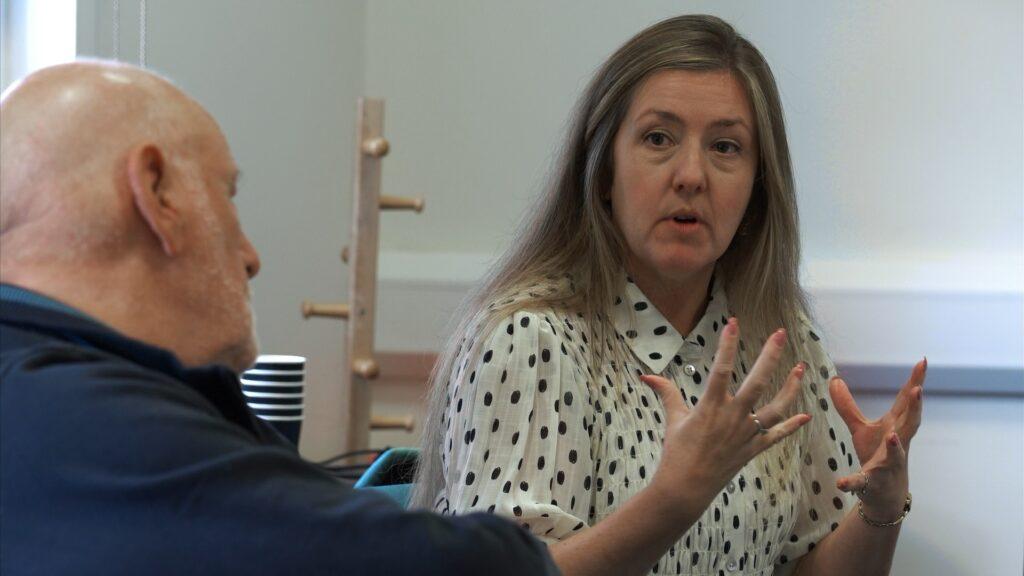
Being an archivist is pretty much the only career I've ever wanted. Most people are familiar with libraries, museums, librarians and curators, but archives are often less well known. I discovered the profession when I was young and, with a long-standing love of history, it felt like a natural path to follow. After studying history at university, I went on to complete a postgraduate qualification in Archives and Records Management.
Today, I work at Derbyshire Record Office, the county's archive and local studies service, run by Derbyshire County Council. Our role is to collect, preserve and make accessible the records that tell Derbyshire's story.
Those stories span nine centuries. Our records cover every aspect of life in the county, from parishes and local government to schools; the records of families and estates; and charities and community organisations, we also hold significant collections of photographs and maps. Our collections reflect Derbyshire's rich industrial heritage too, including records relating to coal mining, cotton manufacture and many well-known local businesses.
As an accredited archive service, we have a responsibility not only to preserve these records but also to ensure they remain available for people to use and enjoy. Every year, thousands of visitors come through our doors, while our enquiry service helps people from across the world access Derbyshire's history remotely. Best of all, visiting the Record Office and consulting our collections is completely free, and our online catalogue makes it even easier for people to discover what's available.
Working in a county record office is wonderfully varied. Unlike archivists who specialise in a single collection, we care for nearly 9,000 different collections, making it impossible to be an expert in every subject. A large part of the job involves helping visitors navigate the archives and find the information they need. People visit for all sorts of reasons: researching family histories, exploring local communities, tracing the history of a property, or resolving questions that may only arise once in a lifetime. Whatever the enquiry, the records can often provide invaluable answers.
New material arrives in many different ways. Some records come to us through transfer, where records are internal, produced by our services. Others are donated by individuals, businesses or community groups. Occasionally, material is accepted in lieu of inheritance tax, left to us through a will, or simply discovered in a loft and recognised as something worth preserving.
Some collections are donated outright, while deposited collections remain the property of the individual or organisation that deposited them. In those cases, we care for the records and make them accessible to the public while ownership stays with the depositor. On rare occasions, we’ll purchase archive collections. Whatever the arrangement, we carefully document the provenance of every collection so that future researchers know exactly where it came from.
The Robinsons collection is a great example of how archives continue to grow and evolve. While most of the records came directly from the business, former employees and members of the community have added their own material over time. Items such as copies of The Link magazine and photographs from company events help create a fuller picture of life within the business and the people who worked there.
Of course, archivists can't keep everything. One of the more challenging aspects of the profession is deciding what should be preserved for future generations. Every potential acquisition is assessed individually. We consider what it can tell us about a person, family, organisation or community, and whether it will help future researchers understand how they lived and worked. For example, we might preserve a company's financial accounts because they reveal how the business operated, while routine receipts may add little of lasting value.
Archives occupy a unique place alongside libraries and museums. In a museum, an object is often carefully displayed with an interpretation panel explaining its significance. Archives work differently. They provide direct access to original records, allowing people to explore the evidence for themselves. That freedom is exciting, but it can also feel a little daunting when faced with many documents and deciding where to begin.
For me, one of the most rewarding parts of the job is seeing what captures people's attention. You never quite know which item will resonate with someone or inspire them to see the past in a new way. Watching a visitor discover something unexpected and hearing that moment of amazement when they realise the story hidden within a document, is always a reminder of why archives matter.
Those moments of connection bring history to life. They show how archives continue to help us understand not only the past, but also the people, communities and experiences that have shaped the world we live in today.
Jane Middleton Smith, Archivist, John Smedley Limited
John Smedley’s collection relates to the production of fine gauge knitwear. We have 13,000 garments - the stars of the show. And everything else that enables them to be created: machinery, hand tools, paper records like accounts for purchasing raw materials, and marketing materials. And the people: personnel and wages records, photographs.
There’s a huge amount of historic material, both in terms of physical artefacts and documentation, and sixteen years after starting the archive, things are still turning up
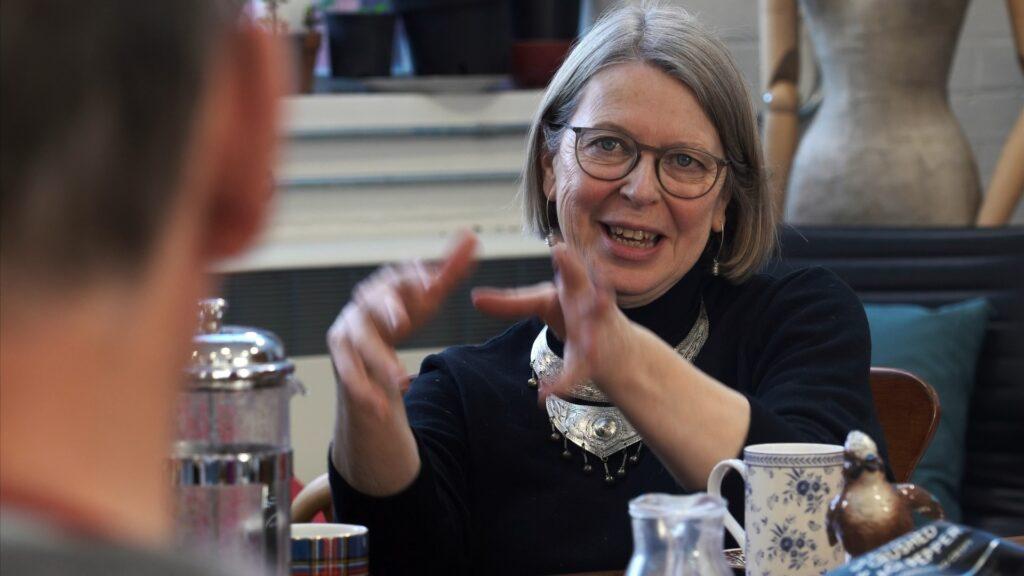
I'm a museum person, really, by background. After completing my history degree, I became a teacher in a secondary school and went on to work in museums; an industrial museum and then a lot of freelance heritage work when I had my family. For one of those jobs, I moved up from London to work in the Derwent Valley and subsequently ended up working with John Smedley as an archivist, which I'm delighted about.
When I became the company’s Archivist in 2009, it wasn’t a job that had previously existed. Having moved up north to work on a collections mapping project with the Derwent Valley Mills World Heritage Site, I was tasked with identifying material relating to the Derwent Valley in public and private collections. As part of this ambitious project, I tried to find people in the locality who had collected, rescued or saved things when the various mills and related places closed, and one of the places I came across was John Smedley.
I was absolutely bowled over by what I found at Smedley’s. There was a huge amount of historic material, both in terms of physical artefacts and documentary material, but not much had been done with it. Items were stored in boxes and scattered around the mill in different places, so I proposed an archive project to the company to coincide with its 220th anniversary in 2004, and they decided it would be a good idea for Smedley’s to know something of its own history and carried on the archive as a permanent feature.
From then on, I started collecting material together and cataloguing, and the more I looked, the more I found. Sixteen years later, things are still turning up. I started off by cataloguing the material the company already knew about, and I was then introduced to the garment collection, which was being looked after by a member of the design team who'd been with the company since the 1970s. The garments – all 13,000 of them! - are really the jewels in the crown of the collection, the stars of the show, and they tell us so much about the company’s history.
For over 240 years, the company has specialised in top end knitwear products, initially the sort of things framework knitters used to make - socks, stockings, mittens, hats - and later on, knitted underwear. Today, John Smedley still operates from its original factory site in Lea Bridge, specialising in premium staple pieces – polo shirts, jumpers, accessories – and the archive continues to document Smedley’s story by accessioning one of each new design.
As well as the thousands of garments in the collection, there’s everything else that enables those garments to be produced: machinery, hand tools and paper records, accounts for the purchase of raw materials, and even marketing documents. We haven't got one of everything by any means, but it’s a reasonably representative collection. Then there are the stories of the people who worked here, captured through personnel records, accounts and photographs. And we often get people who come in and say, “Oh, you know my grandfather worked for John Smedley, do you have anything relating to his job?”, and it's just lovely to be able to show them a wages book with a name inside.
There’s a five-year plan for the archive, but we generally decide annually on priorities for the year and stay responsive as other things crop up such as enquiries from members of the public. My work in the archive is supported by a small and loyal volunteer team who carry out a wide variety of standard and specific museum tasks, from researching aspects of the company’s history, to cleaning and sewing labels into garments – an amount of work it would be impossible to do on my own. The archive is now a specialised museum collection dedicated to the history of John Smedley as a manufacturer of fine gauge knitwear since 1784; contributing not only to the aims of the current business, but more broadly to the understanding of heritage of the Derwent Valley.