Audrey Falconer, Joy Patilla, and Diane Milne worked on the production lines at Robinson and Sons. You can hear their voices in Kate's film.
Audrey was interviewed by Martyn Stonehouse in November 2025. Joy and Diane were interviewed together by Terry Fox and Penny Soames in March 2026.
Audrey Falconer
Audrey began working at Robinson and Sons at the age of 15, joining the gumming department. She continued working with the company throughout the 1950s and 60s, and it was during her time there that she met her husband, Dennis.
I went into school at Schoolboard Lane. We went there learning all about the firm and everything, and then they allocated you out to different departments, either in Walton or Wheatbridge. …I happened to go to Portland [where we were] doing Quaker Oats, mainly. Then I went into what they called the gumming department [where they ran] Quaker boxes through the machine and glued them, [to] send them flat. …You put them in a box, and lorries took them to Quaker factory, from downstairs, and out to [the] warehouse. I worked there from leaving school after being in …the Robinson’s prep school. It was getting you prepared for whichever department you'd be better doing. After that we went into [the] factory.
There were about five of us on. There were two on what we called racks. They used to come down the machine [and] they'd go through the gluer. And then they used to put them in racks. Then we were on the other side, [where we made] what we call a band, a cardboard band, that used to come round, and you'd stick it with gum paper. Somebody fed them in at beginning, and they came through the machine … on to what they call catching belt [and then onto] the racks. …Two girls on the side… used to package them up and put them into a truck [and] then they used to parcel them up and send them off to Quaker. While this was going on, they [were all doing different things] at Walton and Wheatbridge and Holmebrook [works].
I caught a half past six bus from down near the power station. I used to get off the bus on Brampton, because they were provided, they were Robbo’s buses, as we got called Robbo’s Angels.
We are the Girls of Robinson's,
We work hard every day
The roses of town are in our cheeks
They quickly fade away
Some people say we're common,
but common we may be
But if it weren't for the girls of Robinson's,
well, where would Florence be?
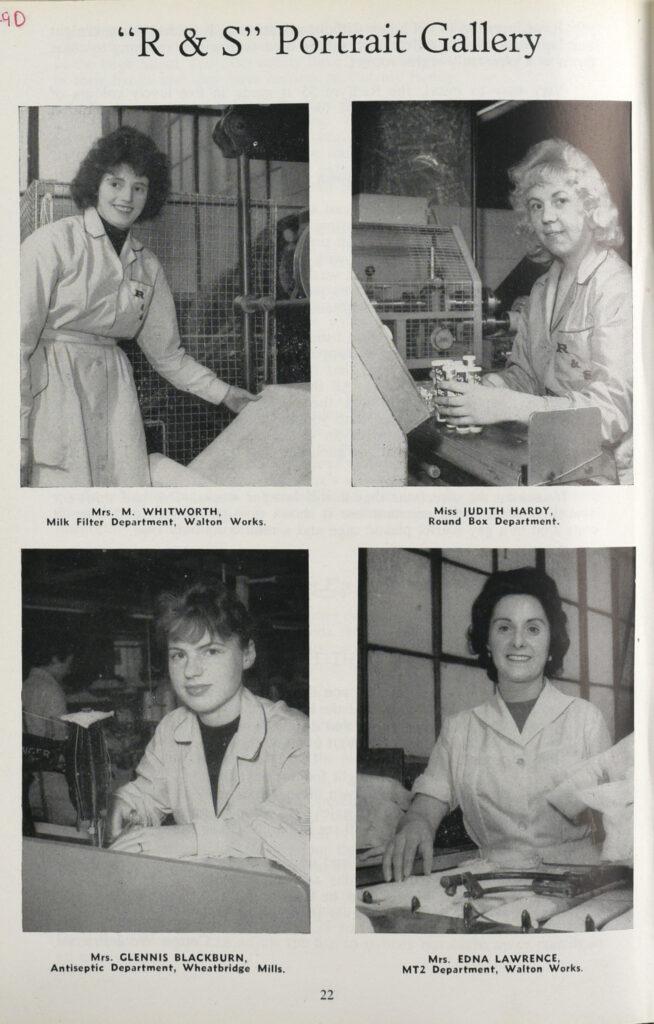
I used to have to go through the factory yard [and it] were pitch black [at that time in the morning]. We used to go up these steps, and there used to be a joiner's shop [at the] top, and… you went through a doorway into the main factory then, and [you’d] wait for all your mates to get there. Then you could start your machines up and get cracking. …There would be a couple of men [who would] switch [the machines on]. One man, Al Swift, used to go in early; he used to put the glue pots on ready for [the] machines, melting glue to go on [the] boxes. They used to be naughty sometimes - I was first in of course and they used to kill mice, and hang them on lights, which was a bit of was fun, I suppose. A bit of light humour. But they were all nice chaps. I got on with them all.
We used to have a break, and we could have a cup of tea and that and take us flasks and things…. We used to bring eggs. My mum used to put me an egg in, and [we] would [use a band to make a circle and] put them on top of the machine to cook. And so, when it were break time, we'd got a nice soft-boiled egg. That were very good. In general, it were a nice place to work and I made some nice friends there. They were a nice crowd that I got in with, and I think that makes you all right.
We used to go [to Bradbury Hall, the company canteen] for dinner [and a] lot of us used to go to town. We'd go through [the] park if it was summertime. They used to have a dance as well for employees and …we used to have …presentations with watches for 25 years [service]. I used to love work, [and] I got [in] with a nice crowd, …they were all decent girls and that. It was always noted, you see, if you worked at Robbos,… but I liked it. I enjoyed it.
After that… I got onto the shop floor and then Dennis joined in with the group. …They said, as long as we were a steady couple [and] didn't mess about at work at all, they’d let us work together. …We got married in 1962, so I'd known him perhaps about 3 or 4 years. [Dennis] ran the machines that glued the boxes. …All his aunties and uncles and all sorts of people [were related] to Dennis [and] worked at either Walton or Wheatbridge.
I was always happy there. We were always happy there. There were no two ways about it. When I first were employed, we left school, I was going to go on to Coop Milk. Because I like the outdoors, you see, but they said, "You know you have to learn to drive, don't you?" [and] that was it, I went to Robinson's and I stayed there. Dennis were there 45 years. I think it must have been 45 years because he started when he was 15, same as I did. My birthday were in February and his were in July, [both born] 1937. But I couldn't fault it. I had a nice time there, and then Dennis worked there, and we got married, and [after] 60 odd year, we didn't do bad, did we?
Joy Patilla
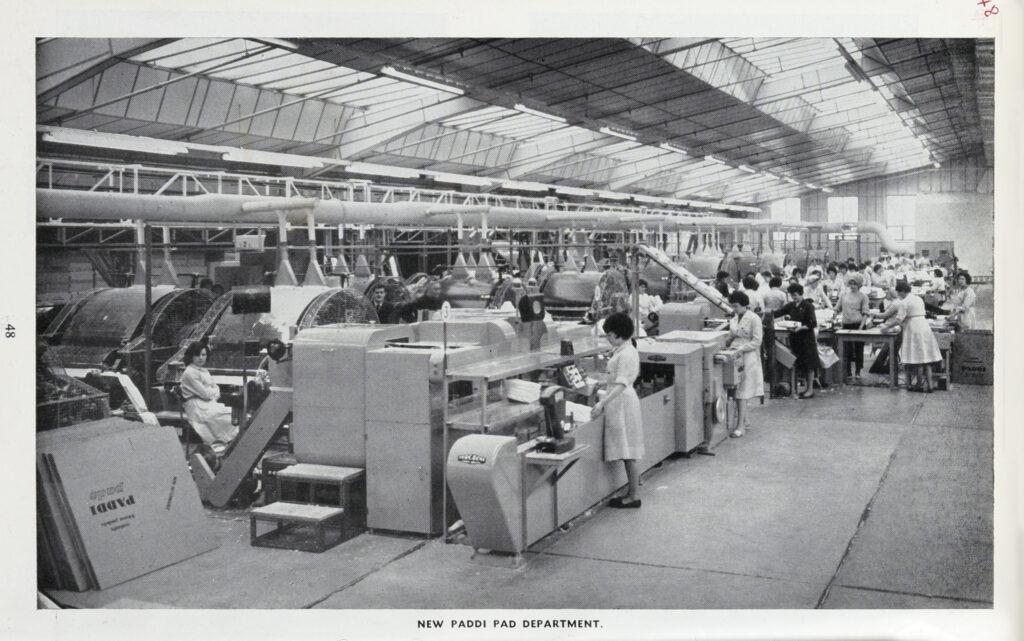
Joy joined Robinson’s at the age of 18 in 1971 for a temporary factory job at Walton Works, but stayed for 30 years. Working across various roles, she produced healthcare products, from incontinence pants and milk filters to sterile surgical packs, first aid kits and plasters. Much of her time was spent working as part of a large team before she left the company in 2002.
When I first came, I worked on healthcare [products…. It was quite [hard] for me because I wasn't used to that kind of an environment. I'd been used to [working] outside [with animals]. I weren't used to girls swearing and cussing and all that because I'd not heard that, you know. And they thought I was posh because I didn't swear and all that jazz. But I soon got used to it. When I first started, it was sort of quite alien having to be chained to a machine catching these things all day, just working as a team, because I'd always worked on my own.
When I first went there, there'd be 20+ in the department. It did take some getting used to. Being inside and rushing, to me it was a big rush and you didn't really have time to think what you were doing…. The machine was set for a certain speed… there was somebody worked on the back… putting the wadding on, and you know, you've got to change it and put it on. And then there were two girls in the middle, one either side catching the sheets as they came off, and they put them into boxes, and they sent them boxes down, and there was one on the end that were sealing them and packing them and putting them on the conveyor belt, and you just swap round… And what took me a while to learn was… it felt like a machine was bossing you about, making you rush, and you've got to learn to keep up to it as well as try and learn the job. It's like you've got to work and keep this machine going… you have to go as fast as the machine went… try and be faster than it. It was heavy work, yeah,… but you've got to keep going.
There was boxes of 100 and there was boxes of 200, so depending on what machine you was on, I can't remember really how many. I think something like 100 and odd an hour or something, that were flying through. It's a lot… and you've got to keep that [up] all day. But I preferred [being busy]. When they put me on the packing jobs, …I didn't like that because I don't like sitting all day. … I'd rather be moving about. I was happier on jobs where I could move about rather than just sitting. I'd switch off, I'd be bored, I needed to move about.”
Most of my working time was up at [the] Walton [works]… in the healthcare. Then they built this other building called the West End. I went into there and eventually I went over to a six-storey building where they were doing first aid kits. …Downstairs and upstairs, …there must have been 50 or 60 folk working there. …It's when they brought bandages and plasters over from Rugby because that place was shutting down, so I had to go to Rugby and learn how to run the bandage machine, and they brought that over and put it in…on the first floor.
[It was] very noisy. When we first worked there, there was nothing like [ear defenders], not the same kind of health and safety that you've got now. You could chat, [well] you know, shout. …until your machine jammed, and then they would say, hurry up, …because you were talking. …A lot of the girls in the weaving sheds, it was so noisy in there they could lip read. They couldn't hear each other and [so] they learned to lip read. … The worst one for that in ours were where they punched the cards because it were loud with the card book. They did have ear [protectors] on, but sometimes you'd go down to see about something, …you could hear it before you got there.
…When you went into the first aid place and into where the finished plasters were and everything, it was called the clean room. So you've got to have everything on right down here and covers on your feet, and it were red hot in there. Yeah, they were really boiling, and you're all scuffed up in all this glue. [That was my worst job]…having to clean the glue. Yeah, white glue. And then, on the top, we used to have this brown glue. It smelled, it were animal glue. We used to have to spray… and then had hot melt put on it, a machine that you put glue in it, it melted it. That weren't so bad as what when you were mixing the brown one up. I remember the smell of animal [glue], horrible.”
Diane Milne
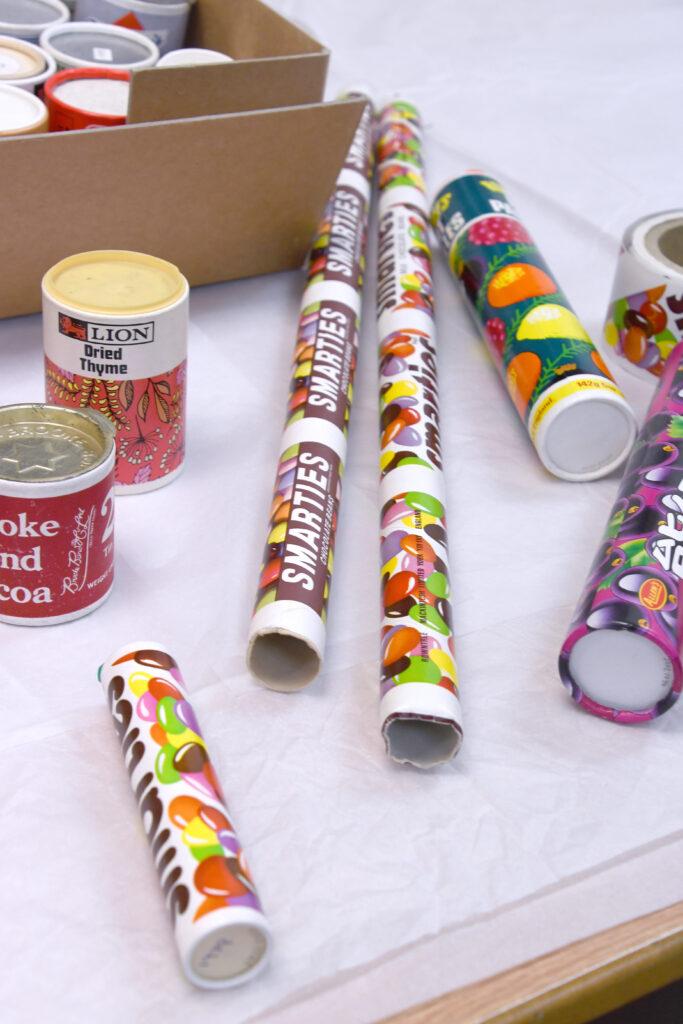
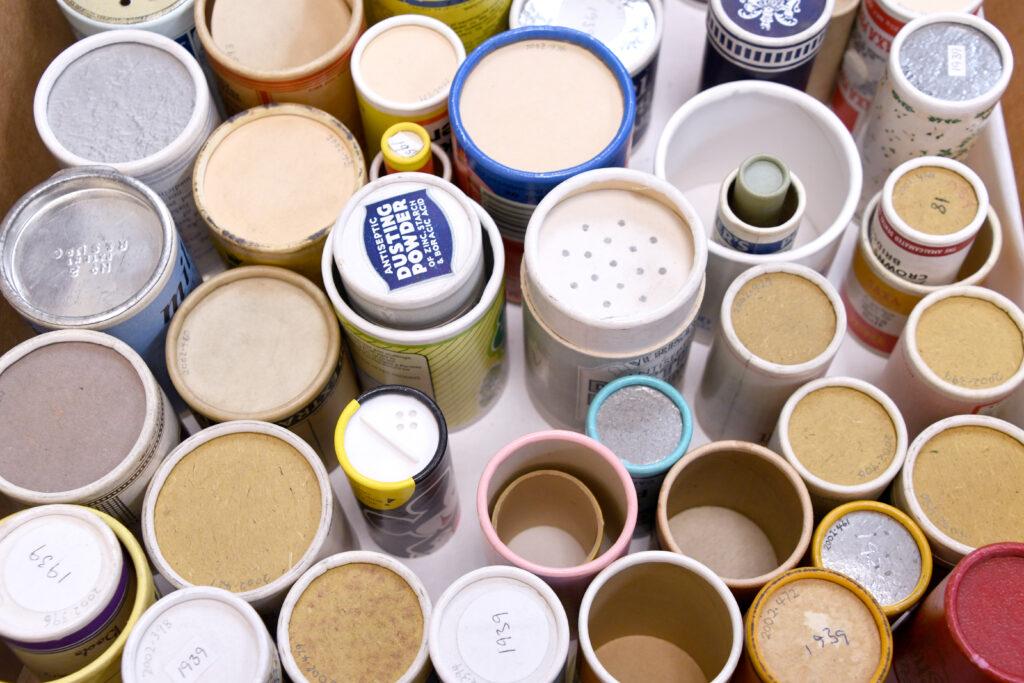
Diane worked at Robinson and Sons for 24 years, through the 1970s, 80s and 90s, mostly working in the round box factory on packaging for products such a Smarties and Jelly Tots.
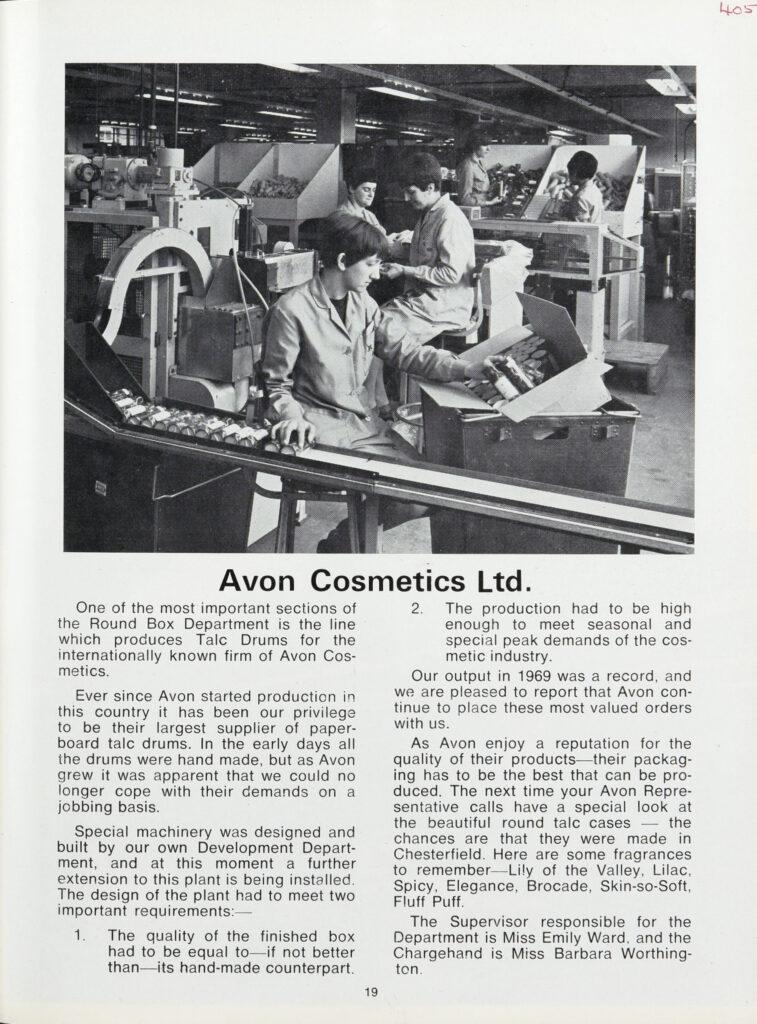
“[I started in the] round box [department] where [we made boxes] for Nestlé, [Avon], talc and Smarties. We were more like a family together there. The [workers] were a bit catty… when you were new, but if you fit, you were all right. I got used to jobs because some of them were similar to jobs I did at the bakery [where I worked before]… it was the same sort of movement, so I could do that machine to start with.
We made tart boxes which had a plate and tube. …One girl stood at one side and.. then it went down to the next… and you put a felt in it which had a hole in. Then the next one put a plastic on it, and it moved along around the ‘Delphine’, as we called it, and it blew off… And then you had two packing here and one at the other side sealing them up and putting them on the belt to go down. …It used to do 60 a minute…They had us have it speeded up and we're doing 72 a minute. It's… all go because the girl on the end had got to make the cartons up, bring them down, check everything, make sure it's all right, seal [the box], put it on the… conveyor. …She was quality control… at the same time as doing everything else, making sure - and the girls there got to catch and keep them on the rolls.
You've got a stop button, you could stop [the machine] yourself [if you’d made a mistake], but we tried not to because that's where your money goes, …that's where you got your bonus. …One of the others would try and help you quick to keep it going.
[It was repetitive work]… we had to pick tubs up and put [them] on because we hadn't got chutes over the machines for bags… to come down over your machine…. They used to do the same [for] the pastels and jellies. You used to feed them on one side, so they were [the] right way, and there were glue on it and it glued the thing and stamped them on the bottom so you knew when they were produced.
We had …some plastic machines come in, you know, injection moulding for the plastics. They made that as well here before it went down to Kirby. So inventive, isn't it… you take them for granted, don't you, when you buy a box of chocolates that everyone's the right shape for the right chocolate.
We also started making oval talc tubes… They got your oval plugs and then you had a wooden jig and you put that on and you had to line it up. …We had to work out where the front were, and you'd have a line on it so when you put your seam to it, you knew it were there. You pressed it, put your plug in [and] got an oval box from it. [Lots of companies wanted the oval boxes]. We made heart shape [boxes] for people like Thornton's, and then, yeah, you just put them on a jig, put glue on it and it was round when it were made, but it made it into an oval heart shape. Then you put a heart-shaped card on top and stick it.”
From the conversation with Joy and Diane:
The buses …used to drop [the workers] off and pick up. … It was from round here, so it was, you know, quite a widespread. Derbyshire, - Alfreton, Clay Cross, Wingfield, places like that. [You’d see them] all at the time. We used to have the school playing fields out of the grammar school up at the top at Brampton terminus, and when you came back on the corporation bus, you could see all the buses [full of Robinson’s workers]. Chesterfield would be awash with Robinson's overalls, you know, if people were leaving work. It was yellow overalls [for] Walton [works], turquoise down here. …They used to come to work with rollers on and take them off when they [got there], [and] they had a scarf. Yeah, they were Robbo's Angels.
If you were doing the half 7 to half past 4 shift, you had a break in the morning and an hour at lunch, but if you're on shift, you had half an hour break, then a tea break. That were paid for because it [was] in your shift allowance, then they altered the timings because people wanted to have Friday afternoon off. …They took so many hours off Friday and added it on into the week… to sort of concentrate the hours Monday to Thursday… and then just Friday morning. You had tea breaks… We used to have a break in the morning [and]… an hour at dinner time, we used to go to the pub, which you can't do now, and a 10-minute break in the afternoon, and then they swapped it so we only had half an hour at dinner.
The canteen for us was here, but Bradbury Hall was open. Robinson's owned Bradbury Hall, [and there were quite a few things went off there, …a lot of clubs and societies and that, [like an] Operatic Society [and] bowls… [Then there was Knockala at Walton Dam],…the girls used to do rounders and the lads used to do cricket. It was good, with a lot of team spirit in getting involved and that. And you had T-shirts on, like Portland Works, you all had your own team from your own section. [The] company supplied them [and we] used to have a sash.
We used to have fun. [The] girls would get together and they might go out on a Friday night and do Brampton Mile. We used to have trips, go to London for shows and that, when I were here… at Blackpool and places like that. And you could have fuddles and that at Christmas. They were very good at doing social events and involving everybody. I think that was still when [Florence] Robinson was still here.[The managers would] always used to come round at Christmas and wish everybody a nice Christmas and shake your hand and all that, [and we’d get a Christmas bonus]. I think [the best memory] was just [the] friends you made, and I still see some of them.